On Human Relations with Other Sentient Beings
  • Home
  • The Blog

Radicals & Revolutionaries feature Ronnie Lee

4/2/2022

1 Comment

 
Picture
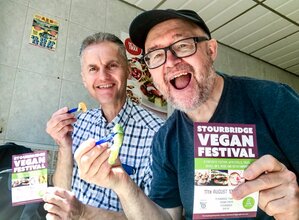
My old - very old - mate, Ronnie Lee is the second guest of the new Radicals & Revolutionaries Podcast series.

"At the beginning of the Band of Mercy and the Animal Liberation Front, someone liberated that first animal and struck that first match. And it was Ronnie Lee.

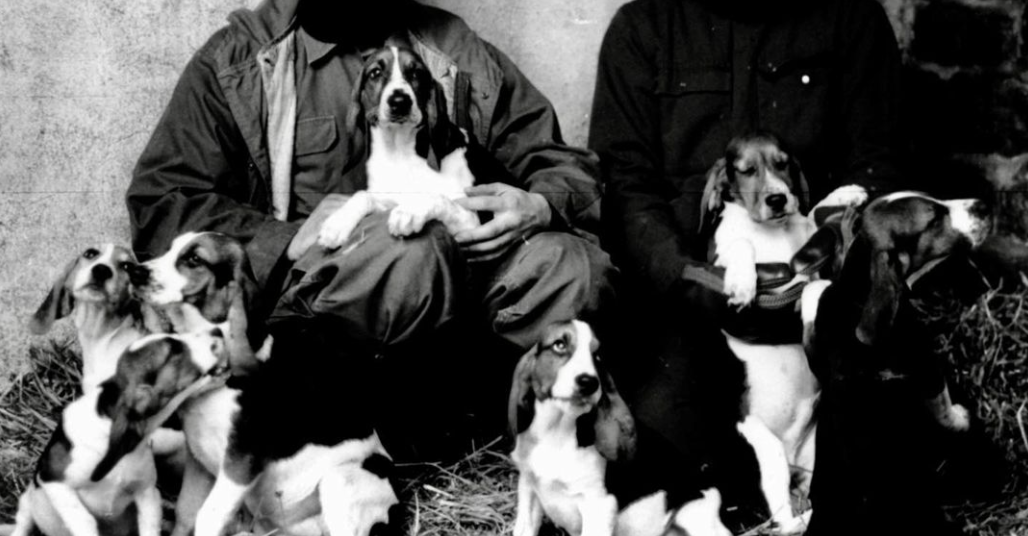
Born in 1951, Ronnie would become interested in veganism and the world of animal rights by seeing a TV program in the early 70’s about the Hunt Saboteurs Association. He would soon join, and launch his own chapter, sometimes sabbing by himself.

But he realized that if you could keep the hunt from leaving in the morning by sabotaging their equipment and vehicles, you wouldn’t even need to be in the fields. So in 1972 the Band of Mercy was born. Starting out with low level attacks on hunt vehicles and kennels, he and his friends turned it into a crusade against all animal use. By 1976, they had become the Animal Liberation Front, and as they say, the rest was history."

RONNIE LEE (part one) - "
And then we had heard about a vivisection laboratory that was being built and we used to go hunt sabbing in that area. “Oh blimey! That’s quite a lot of it there now…” We happen to have a gallon of petrol, of gasoline in the – in our car. So we thought “Well, why don’t we have a go now?” Y’know? So we sloshed it around in the annex, and threw a couple matches down, and it went up – woosh! And we made our getaway!"


RONNIE LEE (part two) - "I was arrested in ’86, and charged with conspiracy – charged with conspiracy to cause arson, to cause criminal damage and to incite other people to cause criminal damage. I didn’t do the damage myself, what I did was encouraged other people to do it. They said “oh, we suspect that Mr. Lee dabbled himself in this action,” which I did, a lot! But they couldn’t prove it!"
Picture
1 Comment

The Mistake of Single Issue Militancy and the Need for a Deep Radicalism Instead

2/20/2022

0 Comments

 
Picture
In February 2022, in the lead-up to his 50th veganniversary, Ronnie Lee (who became vegan in Spring 1972) and Wenda Shehata released a video that looked into some of the history of the vegan and animal protection social movements. Amongst a whole range of issues, Ronnie and Wenda looked at the issue of movement take-off, an interest of sociologists like myself who look at social movement theory, and the concepts of “militancy” and “radicalism.”

Ronnie and Wenda’s discussion can be viewed on the Forward to Animal Liberation Facebook page - https://www.facebook.com/110009078121280/videos/470017964600001


Ronnie identifies what he now sees as grave mistake of the modern animal protection movement: the failure to see the potential and thus bring into being widespread grassroots-led vegan education. Remarkably, almost unbelievably, the vegan social movement was not engaged in vegan education until the beginning of the 21st century. In Ronnie’s view, this was at least 25 years too late and, had this move occurred earlier in the history of the movement, the mobilisation for animal liberation would be further advanced now than it is presently. I agree with Ronnie's analysis, as would Gary Francione, who has been an advocate of vegan education as the major MO of the animal movement since the 1990s.

Ronnie notes that when direct action arose in Britain - starting with the Hunt Saboteurs in the 1960s, the Animal Liberation Front in the 1970s, followed by the liberation leagues and SHAC in the 1980s and 1990s, several national groups were already campaigning on single issues such as vivisection, hunting, and intensive (factory) animal farming. With an influx of younger people into the movement, there began a shake-up of these “conservative with a small c” organisations. Some responded to the demands of the younger generation, or were taken over by them. One major change was that largely inactive groups that traditionally merely asked members to send them donations and write to their member of parliament became campaign and protest groups which were staffed by vegans. The vegans who were part of a large increase in veganism Ronnie observed in the 1970s. In addition to the transformation of existing groups, new campaigning groups such as Compassion In World Farming (1967), Animal Aid (1977), PeTA (1980), and Vegetarians International Voice for Animals (VIVA! - 1994) were formed. Ronnie says that, although the animal protection movement was changing, it’s conservative welfarist base remained: “To some extent, it carried on being welfarist but, like, militant welfarist shall we say.” The movement also remained dominated by national groups that keep a fairly firm grip of its financial resources. Indeed, as can be seen, the number of such organisations grew at this time. 

In relation to events such as "World Day for Laboratory Animals" (initially organised by the British Union for the Abolition of Vivisection or The National Anti-Vivisection Society), which are attended by about 700-800 people in the modern day, these marches attracted 10,000-20,000 in the 1980s, both Ronnie and Wenda remember. Similarly, tens of thousands of people would attend “save the seals” and “save the whales” events in those years. For Ronnie, the fault line in the movement was revealed by the fact that, although “there were vegans in these organisations campaigning on all these different issues, nobody was campaigning for veganism.”

I think this is one of the strangest things for 21st century vegans to try to grapple with. A social movement that had significant and growing numbers of vegans within, nevertheless largely ignoring veganism in terms of its campaigning focus. How does that make sense? In the US, for example, although PeTA began as an animal rights group in 1980, by the early 1990s, its “president” Ingrid Newkirk took up the fight for animal welfare and for “the regulation of atrocities” against animal rights philosopher Tom Regan, and animal rights lawyer Gary Francione who were, respectively, advocating for rights-based animal rights, and veganism as the movement’s moral baseline. In 1993, the Vegan Outreach organisation was founded but, by 2005, its founders were regretting having the word “vegan” in its title. In 2011, co-founder Matt Ball, complained that “vegan” meant reduced donations: “Foundations and rich non-vegans give to groups with similar philosophies and approaches, but they won’t give to “vegan” outreach.” Ronnie’s summary of such times amounts to this: “In some ways the movement became more radical, but in many ways it stayed just the same.”

However, Ronnie adds: “Probably ‘militant' is more accurate than ‘radical' because militant describes a form of action, [whereas] radical is more about philosophy.” Radical means getting to the root of the problem and clearly, until very recently, and often due to the movement’s corporate nature and the number of wages they thought they must finance, prime movers in the animal movement were absolutely resistant to making veganism the moral baseline of the movement. They often put about the idea that veganism was “a scare word.” Ironically, it was a scare word for them - they thought their incomes would drop if they used it, so they favoured words such “veg,” “veggie,” and even “veg*n” instead - however, it turns out it isn’t much of a scare word from the general public’s point of view, or for the manufacturers of plant-based foods and products. It appears that even the national groups in the movement are no longer petrified of the dread 'V' word. For example, VIVA! (Vegetarians International Voice for Animals) now declares itself, “The Vegan Charity." 

The status of The Vegan Society has always remained something of a puzzle in this story. Ronnie and Wenda noted that it wasn’t seen as a campaigning organisation - it wasn’t (and isn’t) an “on the street” group like Animal Aid, for example. I doubt that most of the large influx of vegans in the 1970s onwards ever bothered to join The Vegan Society. I have never been a member despite being vegan since 1979. I also doubt that their membership has risen massively even in the wave of vegan popularity currently being seen. As far as I can tell, the only engagement modern-day vegans have with The Vegan Society occurs when they quote (and often misquote) the official definition of veganism.


The Two Garys.

At least as far back as the publication of his 1996 book, Rain Without Thunder: The Ideology of the Animal Rights Movement, Gary Francione has argued that the promotion of veganism should be the central plank of the activities of the animal advocacy movement. History will likely remember him as very influential in moving the animal movement (finally) to adopt veganism as its moral baseline. However, he will still argue that the movement has failed to do that and, instead, promotes veganism as merely one option that will reduce animal suffering among other things like reducing the consumption of animal bodies and their secretions, and taking part in things like “Meatless Mondays.” For him, as for many vegans, being vegan is a moral imperative if one adopts the philosophies of veganism and animal rights. Francione will also say that there is no animal rights movement in reality, just an animal welfare movement bearing its name. He may point out that, for example, national groups like Mercy for Animals and Animal Equality spend millions of dollars per annum on animal welfare “cage-free” campaigning instead of vegan campaigns (see the Open Philanthropy Project grant database). Gary Francione has left the movement but is still active in what he calls a “counter-movement” known as Animal Rights: The Abolitionist Approach.


Many people relatively new to the vegan movement will tell you with a straight face that Gary Yourofsky started the vegan movement and has created more vegans than every other vegan activist combined. That may or may not be amusing to Ronnie, since Yourofsky was two years old when Ronnie became a vegan activist (he was 9 years old when I became vegan). Although veganism wasn’t promoted to the public in those early years, it certainly got around the activist communities, which is why Ronnie claims that there was a big increase in the numbers of vegans in the 1970s. By the 1980s, I’d say the majority of animal “militants” were vegan (although some will have been vegetarian for sure). Yourofsky’s first impact was the launch of his website in 1996 but that ended up in a financial disaster forcing him to resign. PeTA stepped in and offered him a paid job as their "national lecturer," and so the college lecture tours he became famous for began. By 2010, he had given the same talk hundreds of times so he was good at it. His talk at Georgia Technical College in the Summer of 2010 was filmed and was subsequently heavily promoted within the animal movement. 

A year later, in 2011, I was part of the Animal Rights Zone team that asked Gary Yourofsky whether he was prepared to retract talk of his extreme violence fantasies, part of which involves regularly wishing for humans to be viciously sexually assaulted until they were disabled for life. Yourofsky replied in something of a rant, saying he “adores” his violence essays, while defending his drugs use, and attacking “animal rights people:” Yourofsky has said that he hates humans, apparently including himself. “Most animal rights people LOVE their families and worship humankind,” he said. By this token alone, and despite repeated claims in the modern movement that he has made more vegans than anyone else, ever, Gary Yourofsky clearly does not understand vegan philosophy very well. While he hates humans, and calls us all “parasites,” the pioneers of the vegan social movement remained optimistic about humanity believing that the widespread adoption of a vegan mindset would mark their moral evolution, leading to a less-violent humanity. Social movements are, after all, made up of human beings. Yourofsky has since bailed out of the vegan movement and “retired,” leaving the other animals to their fate after a mere 21 year’s involvement.

Of the "two Garys," I'm sure that movement historians will regard Francione's as the much more significant contribution.


How We Got to Where We Are!

Social movement theorists often talk about movement cycles, waves, and stages. In terms of the latter, social movements may emerge, grow, professionalise, and die (they may die because they’ve done their job, by the way!) It can be a rocky road for social movements, and there are certainly likely to be highs and lows in their journeys. In Bill Moyer’s social movement action plan, there are eight movement stages including “take-off” which, as the name suggests, can be dramatic and, for some, an overnight phenomenon. The stage before “take-off” will intrigue those who know the history of the vegan social movement, since it is called “ripening conditions,” echoing something Donald Watson wrote in November 1944 in the very first Vegan Society newsletter. Moyer’s theory dates to 1987. He writes: 


“The ’take-off’ of a new social movement requires preconditions that build up over many years. These condition include broad historical developments, a growing discontented population of victims and allies, and a budding autonomous grassroots opposition, all of which encourage discontent with the present conditions, raise expectations that they can change, and provide the means to do it.”

Of course, not all of that “fits” exactly with any actual social movement, not least the vegan movement, but the broad outline seems pretty solid. It further appears evident to me that the preconditions that Moyer speaks of, related to the present-day vegan movement, rely on the fault line Ronnie Lee identifies having being rectified. In other words, the recent growth of the vegan movement has depended on the groundwork for decades before but, in particular, the widespread, if delayed, establishment of veganism as the moral baseline of the animal advocacy movement. From all of this, we should not get the idea that the present surge in the movement is a product of the recent “influencers” in the movement, including Yourofsky, but owes its origins to the late 1960s onwards. Rather than creating the present “vegan wave,” those who came into the movement in the last 10 years are riding the wave that “built up over many years.” Ironically, as suggested above, some of the main conservative resisters of the move to establish veganism as the movement’s moral baseline, those in the national groups, have finally (by and large) abandoned their “veg,” “veggie,” and “veg*n” claims-making in favour of talking directly and openly about veganism. 

It would not make any sense to the current generation of vegan activists to talk about anything else other than the need for veganism. Wenda and Ronnie reiterate that had the rather obvious fact of the vegan movement focusing on veganism as its campaign been much earlier, then things would be better for other animals than they are now. The movement “missed a trick,” says Ronnie, “of tackling the oppression of other animals at the most fundamental level;” while Wenda says that, sadly, we must regard what actually happened within the vegan movement as a tactical and philosophical “oversight."

Technology.

The advance of technology has undoubtedly been part of the story of the advance of veganism. Before the internet, for example, much of the movement’s literature was 4-time-a-year magazines or the more regular zines, often simply photocopied. The Cranky Vegan - Jake Conroy - notes that, for many modern-day vegan advocates, if it’s not on an high quality video, it may as well not exist. One example of that is an old VHS recording from 1988 of a Tom Regan’s speech at an anti-vivisection rally in North America (see https://youtu.be/oruKMOR7krw). At the time, the video was regarded as the “best animal rights speech ever given,” but its quality is admittedly poor. At the same time, the speech is incredibly rousing and can make the audience really feel that they are attending the rally. As a consequence of its low quality, the speech is not well known in the animal movement, and I do not think because it should be regarded as totally out of date.


Perhaps the advent of smart phone technology, resulting in thousands of high-quality video now available, hinders recent members of the movement from researching the movement’s history, to the extent that they are interested in doing so. Consequently, I have noticed that many recent activists unfortunately hold a rather distorted view of the vegan movement’s development and some really do believe that it began in the 1990s!


0 Comments

Encouraging Vegan Education with Ronnie Lee

3/5/2020

1 Comment

 
Picture
The last (for now) of a series of short videos introducing a number of blog entries on Vegfest Express about the vegan movement pioneers.

​This time, Ronnie Lee, vegan activist since 1972. When Ronnie Lee joined the Northampton hunt sabs in the 1970s, he quickly discovered that he was the only vegan in the group.

Ronnie learnt that it was much the same situation in the other groups that he had joined. "These organisations which campaigned against animal experimentation, against the fur trade, and against hunting - the people that ran these organisations were meat eaters. They’d hold up a placard in one hand...eating a chicken sandwich in the other."


THIS is the link to the original Vegfest Express article.


1 Comment

VIDEO: Vegans: Activists?, Just Plant Eaters?, Just "For the Animals?"

7/30/2019

0 Comments

 
Picture
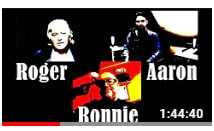
It was a great pleasure for me to recently rejoin Aaron Yarmel for another conversation about veganism, the definition/meaning of veganism, and animal activism.

​This video was a three way with Ronnie Lee, famously the best known of the co-founders of the Animal Liberation Front (ALF) in the 1970s and long-time spokesperson for the ALF, and long-time animal liberation prisoner.

This is Aaron's description of the event on YouTube:

In this interview with Roger Yates and Ronnie Lee, we explore these questions and more: What is veganism? Is it a diet, a set of philosophical commitments, a commitment to activism, or something else? Is Paul Bashir correct that veganism is, and has always been, *only* about animals? What can we learn from the founders of the vegan movement, and what misconceptions do modern activists have about the history of veganism? What does it mean to be an activist, and what do different definitions mean for differently abled activists? Do activists expose themselves to too much trauma? How can activists do a better job reaching ordinary people who are new to veganism? What do real Animal Liberation Front activists think about the portrayal of the ALF in the movie, Okja?

Here's the video and (below) the individual vlogs Ronnie and I made with Aaron.

0 Comments

Take Heart!

6/26/2017

0 Comments

 
Picture
The rise of the reducetarian movement seems to be an interesting challenge to the vegan movement, especially since it seems that in order to promote their position, reducetarians apparently feel a need to attack, or mock, vegans (as purists and extreme) and veganism (as too radical). Some of them use ableist rhetoric to emphasise the point, stating that consistent vegans are "crazies."

There are lots of animal advocates, of course, who subscribe to - or at least understand - the notion of different strokes for different folks. However, it is not acceptable if the reducetarian movement somehow requires the denigration of vegans and veganism.

So, what have we seen so far in this regard? I think we could pull out from the reducetarian crowd a number of examples of them mocking vegans and veganism. Brian Kateman, president and co-founder of the Reducetarian Foundation and editor of The Reducetarian Solution does it in a TED talk, Matthew Ball, who works for One Step for Animals and, until very recently, Farm Sanctuary does it in a video suggesting that many vegans are rude and fanatical, and "rightly" seen as akin to Hezbollah; Sebastian Joy, who runs the German Vegetarian Society, does it in talks at animal rights conferences, and "the 'vegan' strategist," Tobias Leenaert does it whenever possible.


I'll just concentrate on one: Matt Ball. His position is based on distortion. In a recent video inciting people to eat the flesh of cows rather than that of chickens, he cites Peter Singer's Animal Liberation as a main reason for the abject failure of vegan education. Why? Singer isn't a vegan, and writes in Animal Liberation: "I do not, on balance, object to free-range egg production." Singer, like Ball, is a supporter of the reducetarian movement. To cite Animal Liberation in this context is nothing more than propaganda.

Ball then cites PeTA! Seriously, a useless sexist, racist, and ableist organisation that gives awards to slaughterhouse designers ain't doing it for the vegan cause? Big surprise there.

The truth is, vegan education has only just begun. In THIS CENTURY only has the animal movement begun to see veganism as the moral baseline, to the extent that it has of course. There is push back from careerists in the movement to seeing veganism as the moral baseline. Melanie Joy is not keen, for example, but then she writes in her famous book: "it's possible to procure eggs and dairy products without violence."

Do vegans actually read these books before they pronounce that their authors stand for veganism?


So, vegan education has only just begun - check out this audio clip from Ronnie Lee, the co-founder of the Animal Liberation Front who went vegan in 1971. Ronnie has effectively "seen it all," and he certainly knows that vegan education is, historically, brand new.

Think about this - did you know that "Mr. Vegan Education," Gary Francione was still writing about himself as "still very much a vegetarian" in 1996, even though he says he went vegan in 1982? Moreover, in the index of his 2000 book, Introduction to Animal Rights, "vegan" is not mentioned once in the index but "vegetarianism" is at least 8 times, along with this little line from page 17: "The suggestion that taking animal interests seriously requires that we become vegetarians may seem radical."

That's only 17 years ago. Repeat after me: VEGAN EDUCATION HAS ONLY JUST BEGUN. Listen to Ronnie!!!

If you are an animal advocate doing street work for veganism, take heart. This aspect of animal campaigning has only just begun and I bet you have seen a great deal of progress in just the last 5 years, right?

Finally, I, along with the ARZone team, interviewed Matthew Ball in 2011. Then, he suggested that they regretted having "vegan" in the Vegan Outreach title. Doesn't bring in the donations, apparently. Ball was asked: "Matt, if you had to do it all over again, would you still call it Vegan Outreach?" to which he replied: "Good question. We actually had a serious question about this about six years ago. For a variety of reasons, we didn’t change the name. But I know having "vegan" in our name hurts us in different ways, most clearly on fundraising."


Repeat after me: BEWARE OF CAREERISTS! and VEGAN EDUCATION HAS JUST BEGUN!!

​

0 Comments

On Human-Nonhuman Relations Podcast 39 - Jon Hochschartner

7/22/2016

0 Comments

 
Picture
This 39th episode in the On Human-Nonhuman Relations Podcast series features a big name - a long name - in the animal advocacy movement, Jon Hochschartner.

Jon is a writer who has recently turned his attention to the history of the animal movement. His biography of Ronnie Lee, Animal Liberation Front co-founder who is still active in the movement in England, is due to be published in 2017.

Jon is currently fund raising for his latest biography, that of Josh Harper who was jailed for three years for his role in the campaign against Huntingdon Life Sciences vivisection company and now helps to run the excellent Talon Conspiracy achive.

​Check out the fundraiser here.

We talk about all these things in this new podcast.

0 Comments

Are We Going to Fight Back – or Just Watch it Happen?

10/19/2015

0 Comments

 
Picture
Right now – systematically – the philosophy of veganism is being deliberately dismantled.
 
The very guts of veganism – the justice-for-all basis of the idea – are being ripped out and ripped up.
 
There are a number of animal advocates busy undermining the principles that veganism is built on. They are spreading the lie that veganism is nothing more than a plant-based diet. This shallowing out of veganism is summed up in the statement that the vegan movement is “about food.”
 
Veganism has never, ever, only been about food. Veganism is a philosophy for living in peace with the world to the extent that it can be done. It ultimately stands for non-violence and seeks a radical transformation of human values. The introduction to the excellent book, The Essential Marcuse, edited by Michael Feenberg and William Leiss, discusses and outlines the thrust of the radical vision of critical theorist Herbert Marcuse which closely correspondents with vegan aspirations.
 
         A society…richer in public goods and human sympathy – in parks, schools, and medical care; a society more just,           more egalitarian, more helpful to the world’s poorest people, less warlike, less racist, and less frantic about the                 pursuit of money; a society more considerate of the needs of other animals, more respectful of wilderness and                   Earth’s remaining solitudes (Feenberg 2007: xli)
 

​Sociologist Matthew Cole writes* of “the breath-taking transformative vision of the vegan pioneers in the 1940s and 1950s.” He argues that the aim and object of veganism combines compassionate non-exploitation of other animals with an emancipated vegan self, and a more compassionate human society. Vegan ethics, Cole argues, right from the beginning, was directed towards the interconnected goals of transforming human beings and transforming human society in a grand vision of justice-for-all. Not for nothing did Donald Watson declare that veganism was the greatest cause of Earth.
 
Brand Spanking New
 
21st century vegans surely have difficulty recognising that their movement is so new. Shiny new! The British Vegan Society has been around since 1944, sure, but that does not mean that veganism has been central to campaigning for more than a couple of decades – at most.
 
Long-time animal advocate Ronnie Lee began to live vegan in 1971 but he explains that, when he went vegan, all the large animal organisations were staffed by people who consumed other animals. Then Peter Singer’s Animal Liberation was published in the mid-1970s, followed by Tom Regan’s rights-based The Case for Animal Rights in 1983.
 
The publications of these books changed animal advocacy forever and Ronnie says that one consequence was that the staff of the large groups started to live vegan. However, even though they went vegans as individuals, the campaigns they ran were not vegan-based, a situation that some argue remains to this day. The campaigning in the 1980s and into the 1990s remained committedly single-issue in nature. Anti-bloodsports, anti-vivisection, anti-“factory farming,” anti-circuses, and so on and, true enough, these campaigns continue today.
 
So, even though the campaigners were vegans, the idea that veganism should be the baseline position of campaigning had not yet been thought of.
 
The campaigning reality Ronnie Lee describes is certainly the one that I recognise from when I began to live vegan in 1979. I was a press officer for various groups throughout the 1980s, but rarely did any of us speak about veganism. Incredibly – shamefully? – I didn’t mention veganism in hundreds of interviews on TV, radio, or in print. In those days, we limited answers to the issues being discussed, like hunting, or animal experimentation, etc. If veganism was mentioned at all, it was in connection to one’s diet, or what type of shoes one was wearing.
 
So, given that, historically, vegan campaigning has only just started, it is scandalous that attempts are currently being made to stop it for “strategic” reasons.
 
We need to defend vegan campaigning from this attack being lead in the main by vegetarian organisations in mainland Europe. Ironically, their call to reduce to almost invisibility any mention of veganism, animal rights, and anti-speciesism, is compatible to vegetarian ideals but not vegan ones.
 
If you see these vegan underminers being invited to speak at vegan events, question it, complain. If you attend a vegan event where they speak and tell audiences to not be dietary vegans, to eat flesh if paid money to do so, or to routinely consume animal produce in order that the general public will not get a “bad” image of vegans, speak out. Challenge them. Defend veganism.
 
Just as in the 1970s, 1980s, and beyond, just because individual claim to be dietary vegans or have fancy names mentioning “vegan” or “veganism,” that does not mean they campaign for veganism: often the opposite can be true.
 
Have I Nothing Better To Do?
 
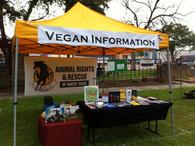
I have lots to do! I’m busy getting the Vegan Information Project’s (VIP) vehicle back on the road after it (he – we call him Neville) was stolen then recovered damaged. The Vegan Information Project provides a unique brand of vegan education outreach in Ireland. Weather-proof gazebo stalls, video booths, plant-based samples and portions, literature, including a zine library, on-the-spot t-shirt making in the summer, and a “tea station” café area where people sit and read, or talk at length to the VIP volunteers about all things vegan.
 
The VIP “Vegan Information Day” events are full-on vegan. Large signs about veganism and justice. We do not find that the public are scared of, or even wary of, exploring the idea of veganism. For the first time in history, most people now know how to pronounce the bloody word! If that is commonplace to you, it certainly isn’t for long-timers like Ronnie Lee.
 
Although there is this important work to be done in Ireland, and it is being done, time also needs to be spent defending the philosophy of veganism from this insidious attack. One of the proponents of this less-than-vegan stance used to delight in telling his audiences that the organisation he founded was funded in part by politicians who apparently believe that vegans have a mental illness. He also routinely indulged himself in the social construction of a “crazy vegan” slur. Talk after talk suggesting that consistent vegans can be “crazy,” shouting in the streets, flailing their arms about uncontrollably, and unable not to be rude and aggressive in restaurants, allegedly “proud” that their dietary preferences are next to impossible to live by. Some of his colleagues still tell audiences in 2015 to be aware of the “crazy vegans.”

Nonetheless, it seems that a lot of this destructive claims-making has been eliminated, slimmed down, or at least not said so much in public of late – so challenging this attack on veganism is well worth it – and important.
 
We’ve just begun – let’s not back down from ripening up people to the justice-for-all philosophy of vegan now!!
 
I repeat…
 
If you see these vegan underminers being invited to speak at vegan events, question it, complain. If you attend a vegan event where they speak and tell audiences to not be dietary vegans, to eat flesh if paid money to do so, or to routinely consume animal produce in order that the general public will not get a “bad” image of vegans, speak out. Challenge them.
 
Please defend veganism.
 

* Cole, M. (2014) ‘‘The Greatest Cause on Earth’: The historical formation of veganism as an ethical practice’, in N. Taylor & R. Twine (eds) The Rise of Critical Animal Studies – From the Margins to the Centre, Routledge.

0 Comments

On the Moral Baseline of Our Movement

9/20/2015

0 Comments

 
Picture
In this ARZone podcast interview, the one-and-only Ronnie Lee outlines his involvement in a new public education initiative, EVE (Encouraging Vegan Education). EVE is a grassroots mobilisation concentrated on forging change on a cultural level. As Ronnie explains, if "ordinary people" continue to exploit and use other animals in the ways that they do, and if they continue to hold the speciesist attitudes towards them that they currently hold, then little will change. If such people do not change, things for other animals remain the same.

As mentioned in the interview, Ronnie Lee will always be remembered within the animal advocacy movement as the co-founder in the 1970s of the direct action phenomenon, the Animal Liberation Front (ALF). However, Ronnie suggests that the ALF could only ever have hoped to play a small role in the liberation of other animals from human tyranny due to the cell-structure of the “organisation,” which tended to keep things small-scale, and – were the ALF to have become a mass movement as he (and I) once thought it would – the state would have crushed it just has they have recently cracked down on the activities and activists of SHAC.

Apart from what Ronnie said about the ALF and its role, what he said about veganism being the moral baseline of the animal rights movement caught my attention, and it is those remarks that are the basis of this blog entry. 

In the show notes, Ronnie is described as speaking about “the long history of veganism within the animal protection movement.” When Ronnie talks about “the long history of veganism within the animal protection movement,” he’s referring to the fact that, even from the 1970s, at least in Britain, there was a steady increase in members of the animal movement becoming dietary vegans as individuals, although few of them “campaigned for veganism,” and fewer still in any consistent sense, or in a sense that veganism was at that time integral to campaigning or campaign claims.

It seems to me, then, it is wrong to suggest that veganism had been established as the movement’s moral baseline earlier than it has been, although I think the 1970s and 1980s can be said to have marked the time of its initial inception. It needed a determined effort to “push” veganism centre stage, as it were and, as Ronnie states very clearly in his interview, it certainly wasn’t central in those days.

Before we try to locate when this baseline position for veganism emerged, and the extent to which it has been established within the animal movement, what exactly does it mean to say that “veganism is the moral baseline”? There seems to be some dispute or confusion as to what we should regard this phrase to mean within a social movement context, so this is my attempt to articulate its meaning.

A fairly standard definition of the word “baseline” indicates that it is, “an imaginary line or standard” and “standard of value.” The word is synonymous with words such as “criterion” and “touchstone.” It seems to me that we can take “veganism as the moral baseline in the animal rights movement” to mean the value placed on veganism as an integral part of what standing for animal rights means (it is hard to stand for someone while deliberately exploiting them) and, in terms of movement claims-making, appeals to the philosophy of veganism would be central in all that is done and claimed for and about other animals.

In my presentation at the International Animal Rights Conference in Luxembourg in September 2012, I suggested that we might think that it is within the rights-based section of the animal movement that the moral baseline idea for veganism makes the most sense. That is to say, if one believes that other animals are rightholders, and that what humans do to them routinely and systematically are rights violations, then being vegan yourself, and integrating the advocacy of the philosophy of veganism into one’s campaigning activities, seems logical and necessary - and precisely because it would seem odd and contradictory to stand for the rights of those one is violating.

So, leaving that last point rather hanging, when was veganism established as the moral baseline of the animal (rights) movement - and why does it matter?

Credit where it is due, I have always accepted and acknowledged the crucial role law professor Gary Francione has played in bringing about the concentration of veganism in the animal movement. I think that grassroots campaigners, without vegetarian and flesh-consuming subscribers to consider as financial supporters, and with no reliance on any politician who may think of vegans as "crazies," have taken to the vegan moral baseline in its fullest sense. Moreover, if veganism can be said to have been developing to any extent as the moral baseline “before Francione,” then it would have been in the grassroots part of the movement - and the grassroots of most social movements have traditionally been regarded as that movement’s backbone and heartbeat.

However, I would claim that Francione, more than most, worked to bring veganism to be seen as an integral part, and an integral logic, of the animal advocacy movement from the 1990s onwards. He has been critical of the “vegetarian first,” and “vegetarianism as the gateway to veganism” arguments, while fully accepting that people may not be able to “turn vegan” overnight or "all at once." There is a lot of acceptance of inevitable incrementalism within Francione’s position on human relations with other sentient beings which is often ignored or downplayed.

The substantive “push” towards establishing veganism as the moral baseline began in the 1990s - in the sense of being absolutely integral to campaigning and to claims-making – and that indicates why it is important to acknowledge its recent origins and not attempt to do what Ronnie and Ms. Bailey did in Ronnie’s podcast: imply that philosophical veganism has been central within the animal movement for much longer than it has been. Ronnie is perfectly correct to suggest that many and probably most of those early campaigners he rubbed shoulders with were vegans as individuals - but he’s also right to acknowledge that they did not campaign for veganism in the senses that we see it campaigned for now. This means, I suggest, that veganism was not the moral baseline back then – far from it: that move, that flowering, that flourishing, has been in very recent years.

The idea is so new that the amount of references to veganism on Facebook alone makes it easy to forget how new it is. Moreover, even now, not all sections of the animal advocacy movement embrace the idea, or are ever likely to, not even all in the grassroots movement; and certainly not in the national corporations who continue to have good business reasons to fudge the issue with use of terms like “veg,” “veggie,” and “veg*n.” Thankfully, the latter term, which I have always hated, seems to have fallen out of favour in recent years.

As late as 1996, Gary Francione, the person I am suggesting was instrumental in establishing veganism as the movement’s moral baseline, was still self-identifying as a vegetarian, and there is no mention of veganism in his 2000 book, Introduction to Animal Rights: Your Child or The Dog? Q&As taken from the book are still featured on Francione’s web site and mention vegetarianism rather than veganism. 

THAT’S HOW NEW AND RECENT THIS “VEGANISM AS THE MORAL BASELINE” IDEA IS!

By 1996, many campaigners Ronnie knew – and many campaigners people like Kim Stallwood, myself, and my sister Lynne knew – were self-identifying vegans, and had been so for 10, 15, or 20 years – but that fact does not mean that veganism was regarded as the movement's moral baseline in the 1970s or 1980s. Those early campaigners were within a movement that did not campaign for veganism, and did not include veganism within its routine claims-making until many years later.

If I am right about this, we could and should recognise the newness of veganism being our moral baseline, central to everything we do, and we should take heart that this incredibly new thing has really taken off in the last few years. Now, we are in the position to much more reliably test out how the idea of veganism “plays” within the public imagination. We need to keep going with our new idea and, as Ronnie Lee says, continue to encourage vegan education. We do not need, for whatever reason, to imagine that veganism was the moral baseline of the movement for longer than it actually has been. Moreover, the recent trend to slide away from veganism as some so-called "strategists" in the vegetarian movement suggest, should be rigorously resisted.

LISTEN TO THE RONNIE LEE PODCAST HERE.

0 Comments

PODCAST: Vegan Information Booths

8/7/2015

0 Comments

 
Picture
Number 33 in the On Human-Nonhuman Relations Podcast series explores public vegan education initiatives in the shape of VEGAN INFORMATION BOOTHS. I'm joined by my special guests for this themed podcast - Jordan Wyatt of the Invercargill Vegan Society, Barbara DeGrande of Animal Rights and Rescue of Texas, and Stacia Leyes of The Vegan Review.

We must remember that vegan education that puts veganism as the moral baseline of the animal rights movement is NEW. We may feel that we have been doing it for years and years but historically it has only just begun.

See THIS LINK to hear Ronnie Lee, vegan since 1971, explain just how new vegan campaigning is.

There are people who insist that vegans should engage in less-than-vegan campaigning. There is absolutely no reason for this. Even if we believed that initiatives such as "veggie days" or "meat reduction campaigns" are worthwhile, there are plenty of non-vegans and vegetarian organisations who can do this work.

There are more non-vegan animal advocates, and vegetarian organisations, than there are vegans. Please - if you are vegan, don't be conned into less-than-vegan campaigning. Don't let others convince you that vegan is a scare word (an idea explored in the podcast), or that we should not use it just because some people have negative views about either some vegans themselves or veganism in general.

As Donald Watson said in 1944, our "job" is to ripen up people to the idea of veganism - if there are vegan voices (say, on social media) that are rather off-putting, or you think they may be for the general public, then let's try to encourage positive change in those vegans - but not slide away from veganism. Sliding away from veganism means redefining it: resist those voices who are trying to suggest that veganism is merely a diet.

It isn't and it never has been. Please don't betray the original expansive justice-for-all scope of vegan philosophy.

0 Comments

Ronnie Lee: Vegan-Based Campaigning is NEW!

5/8/2015

1 Comment

 
Picture
Long-time animal liberationist, Ronnie Lee, who went vegan in 1971, was the very first guest on a new venture in England called "Vegan Radio International."  In this short clip from the programme (scroll down to the bottom of post), Ronnie talks about how new vegan-based education is.

He says that when he first encountered the national single-issue groups, such as the National Anti-Vivisection Society (NAVS) and the League Against Cruel Sports (LACS) in the 1970s, most of their staff were flesh, dairy, and egg consumers, so there was no vegan campaigning going on in those days in the mainstream animal movement. 

During the 1970s, he says, the concept of animal rights emerged and it became influential within the animal advocacy movement. Therefore, there came a time when most -sometimes all - of the staff members of many of the national groups were vegans as individuals.

Nevertheless, despite this, single-issue campaigning remained the order of the day, and there was still no focus on veganism: the idea that 21st century advocates are so familiar with (some even comfortable with) - that veganism should be the moral baseline of the movement, at the very least, the rights-based elements of it, was a long way into the future.

This historical perspective provided by Ronnie Lee shows us that consistent, sustained, vegan-focused campaigning is very new within the animal advocacy movement, and many people will know that I credit Gary Francione with being one of the main driving forces of the notion that veganism should be at the heart of all animal rights campaigning. Ronnie went vegan long before Francione did (1971 compared to 1982). Indeed, I was an ethical vegan before Francione was (1979/1982). In fact, Francione was still calling himself a vegetarian in some of his writing as late as 1996.

The fact remains, though, that the modern focus on veganism owes a lot to Gary Francione.

Much, much, more important than that, however, is to remember the historical fact that Ronnie Lee points out: vegan-based campaigning is NEW!

If anyone tries to tell you that vegan education has "gone on for many years and its not working," inform them that is simply not true and, to quote the cheesy Carpenters (also of the 1970s), we've only just begun.

1 Comment

    Roger Yates

    Dr. Roger Yates is a rights advocate and sociologist

    Archives

    March 2023
    October 2022
    April 2022
    March 2022
    February 2022
    September 2021
    June 2021
    March 2021
    February 2021
    January 2021
    November 2020
    October 2020
    August 2020
    July 2020
    June 2020
    April 2020
    March 2020
    February 2020
    January 2020
    December 2019
    November 2019
    July 2019
    June 2019
    May 2019
    April 2019
    March 2019
    February 2019
    January 2019
    November 2018
    October 2018
    August 2018
    June 2018
    May 2018
    February 2018
    January 2018
    November 2017
    October 2017
    August 2017
    July 2017
    June 2017
    May 2017
    April 2017
    March 2017
    February 2017
    January 2017
    December 2016
    November 2016
    October 2016
    September 2016
    August 2016
    July 2016
    June 2016
    May 2016
    April 2016
    March 2016
    February 2016
    January 2016
    December 2015
    November 2015
    October 2015
    September 2015
    August 2015
    July 2015
    June 2015
    May 2015

    Categories

    All
    1980s
    Aaron Yarmel
    Ableism
    Ableist Language
    Abolitionising Single Issues
    Abolitionising Single-issues
    Alliance Politics
    Always For Animal Rights
    Amnesty International
    Anarchy
    Andrew Linzey
    Angela Barnes
    Angus Taylor
    Animal Aid
    Animal Equality
    Animal Liberation
    Animal Liberation (book)
    Animal Liberation Front
    Animal Pity
    Animal Rights
    Animal Rights Conference (Luxembourg)
    Animal Rights Movement
    Animal Rights Philosophy
    Animal Rights Show
    Animal Rights Zone
    Animals Property & The Law (book)
    Animal Welfare
    Anna Charlton
    Anthony Giddens
    Aph Ko
    AR2012
    ARCNews
    Arthur Ling
    ARZone
    A Sociology Of Compromise
    Autobiography
    Avoiding Unpleasure
    Award
    Backlash
    Barbara DeGrande
    Barbara McDonald
    Barbara Noske
    BBC
    Being Dogmatic
    Bernard Rollins
    Bloom Festival
    Bob Linden
    Bob Torres
    Brian Kateman
    Bristol
    Bruce Friedrich
    Buddhism
    Calf Food
    Capitalism
    Carl Cohen
    Carnage (film)
    Carol Adams
    Case For Animal Rights (book)
    Chris Powell
    Christie Davies
    Christopher Lasch
    CIWF
    Claims Making
    Claims-making
    Commodore
    Consequentialism
    Counterforce
    CRC Radio
    Critical Theory
    Cruelty
    Cultural Speciesism
    C Wright Mills
    Dave Callender
    Dave Wetton
    David DeGrazia
    David Lee
    David Nibert
    Declan Bowens
    Defending Animal Rights (book)
    Dehumanisation
    Depersonalisation
    Direct Action Everywhere
    DIY Politics
    Donald Watson
    Dorothy Watson
    Dr. Koichi Tagami
    Dublin VegFest
    Earthlings Experience Dublin
    Eden Farmed Animal Sanctuary
    Elizabeth Collins
    Elsie Shrigley
    Emotional Lives Of Farm Animals (film)
    Encouraging Vegan Education (EVE)
    Erik Marcus
    Ethical Vegetarian Alternative
    Eva Batt
    Fairness (concept)
    Farm Kind
    Faye K Henderson
    Federation Of Local Animal Rights Groups
    Frankfurt School
    Freshfield Animal Rescue
    Freud
    Friedrich Engels
    Friends Of The Earth
    Funding
    Funding Appeal
    Fur
    G Allen Henderson
    Gandhi
    Gary Francione
    Gary Steiner
    Gary Yourofsky
    Geertrui Cazaux
    Geertui Cazaux
    Gender
    George Herbert Mead
    George Paton
    Gerry Kelly
    Ginny Messina
    Go Vegan Radio
    Go Vegan World
    Govinda's
    Grassroots
    Hannah Arendt
    Hans Ruesch
    Harold Brown
    Harold Guither
    Hazleton Action Group
    Hazleton Laboratories
    Henry Salt
    Herbert Marcuse
    Herbivores
    Horse Ripping
    House Of Fun
    Howard Newby
    HSUS
    Humanitarian League
    Human Liberation
    Human Rights
    Human Rights Watch
    Humour
    Internet Age
    Intersectionality
    Interviews
    Introduction To Animal Rights (book)
    Irish Times
    Jackson Katz
    Jake Conroy
    James Rachels
    Jeremy Hess
    Jill Phipps
    Jim Mason
    Joan Dunayer
    John Bussineau
    John Fagan
    John Robbins
    Jon Hochschartner
    Jordan Wyatt
    Josh Harper
    Julian Groves
    Jurgen Habermas
    Justice
    Karin Ridgers
    Karl Marx
    Kath Clements
    Kathleen Jannaway
    Kay Henderson
    Keith Akers
    Keith Mann
    Keith Tester
    Keith Thomas
    Kim Stallwood
    Knowing Animals
    Language
    Lauren Ornelas
    League Against Cruel Sports
    Leslie Cross
    Let's Rage Together Podcast
    Linda McCartney
    Lynne Yates
    Macka B
    Mainstream
    Mammals
    Marjorie Spiegel
    Mary Midgley
    Mass Media
    Matt Ball
    Matthew Cole
    Maureen Duffy
    Max Weber
    McDonaldisation
    McDonald's
    Meat Free Monday
    Meat-free Monday
    Meat Reducing
    Media
    Media Sociology
    Melanie Joy
    Mercy For Animals
    #MeToo
    Michael Dello-lacovo
    Milk
    Milton Mills
    Moral Baseline
    Moral Maze
    Movement Crisis
    Movement For Compassionate Living
    Movement History
    National Animal Rights Association
    National Anti-Vivisection Society
    Neil Lea
    Neil Robinson
    Neville The VIP Van
    Newsjack
    News Quiz
    Newstalk Radio
    "New Welfare"
    Nick Fiddes
    Nick Pendergrast
    Norman Fairclough
    Numbers
    NZ Vegan
    Palm Oil
    Patreon
    Patriarchy
    Patrice Jones
    Paul McCartney
    Paul Sauder
    Paul Watson
    Paul Willis
    People For The Ethical Treatment Of Animals
    PeTA
    Peter/Brigitte Berger
    Peter Singer
    Philosophy
    Piaget
    Piers Beirne
    Pigeons
    Pippa Evans
    Plague Dogs
    Plamil
    Podcast
    Poetry
    Pornography
    Poverty Of Ambition
    Power
    "professionals"
    Progressive Podcast Aus
    Prostitution
    Purity
    Rachel Carson
    Racism
    Radicals & Revolutionaries
    Radio 5 Live
    Radio Debate
    Rain Without Thunder (book)
    Real Veganism
    Reducatarianism
    Reducetarianism
    Resilience Of Orthodox
    Richard Adams
    Richard Gale
    Richard Ryder
    Rights (legal)
    Rights (moral)
    Rights (natural)
    Robert Garner
    Ronnie Lee
    Rosemary Rodd
    RSPCA
    Ruhama
    Ruth Harrison
    Sandra Higgins
    Scandals
    Sea Shepherd
    Sebastian Joy
    Sexism
    Sex Roles
    Sexual Politics Of Meat (book)
    Sex Work
    SHAC
    Simon Amstell
    Simon Redfearn
    Siobhan O'Sullivan
    Slaughterhouse
    Slaughter Of The Innocent
    Social-change
    Social-constructionism
    Socialisation
    Social-justice
    Social-movements
    Social-movement-theory
    Sociology
    Speciesism
    Stacia-leyes
    Stanley-cohen
    Stanley-milgram
    States-of-denial-book
    Stephen-clark
    Stephen-clarke
    Stephen Nolan
    Steve Best
    Steve-christmas
    Steve-kangas
    Steven-sapontzis
    Subjectsofalife
    Sue-coe
    Tavs
    Teagan-kuruna
    Ted-benton
    Thanksgiving
    The-animals-film
    The Bloody Vegans
    The-case-for-animal-rights-book
    The-now-show
    The-species-barrier
    The-vegan-magazine
    The-vegan-news-1944
    The-vegan-society
    Thrive Vegan World
    Tik Tok
    Tim-barford
    Tina Cubberley
    Tobias Leenaert
    Tom Regan
    Tom Warby
    Total Liberation
    Trafficking
    Turkeys
    Unnecessary Fuss
    Utilitarianism
    Vegan
    Vegan Buddies
    Vegan Education
    Vegan Education On The Go
    Vegan Information Booths
    Vegan Information Day
    Vegan Information Days
    Vegan Information Project
    Veganism
    Vegan Outreach
    Vegan Pioneers
    Vegan Pioneers Rock!
    Vegan Radio International
    Vegans
    Vegan Social Movement
    Vegan Society
    Vegetarianism
    Vegfest Express
    VegFestUK
    Victoria Moran
    Victor Schonfeld
    Video Talk
    Violence
    Wayne Hsiung
    Wendy McGovern
    World Vegan Summit
    You Caring
    Zami
    Zoos
    Zygmunt Bauman

    RSS Feed

Powered by Create your own unique website with customizable templates.