On Human Relations with Other Sentient Beings
  • Home
  • The Blog

As Welfarists Take Aim

7/11/2024

1 Comment

 
Picture
From my vantage point of rights-based animal rights, I watch – a bit bemused, a bit amused – as the welfarist armies engage in battle.
   New welfare vegans are furious with the traditional or old welfarists and are marching on their fortress, their hill, which is called the RSPCA.
   The new welfarists are angry that the old welfarists are just being themselves: old, traditional, welfarists. “Come over to the new welfarist side,” they cry.
   “No way,” the traditionalists reply, “we are happy where we are. We’ve been doing this for two centuries, after all.”
   So, where does the conflict lie? It’s been created because the new welfare vegans have redefined the phrase “animal cruelty.” For them, being against animal cruelty logically means being vegan. This is not how the traditional welfarists see it. Speciesist culture sees no such link. Neither do journalists, nor academics. The new welfare vegans have built another wall to butt their heads against.
   As far as I can tell as an outsider to this welfarist spat, new welfarist Ed Winters started the ball rolling by declaring in his first book that the RSPCA is a “paradoxical” organisation. They are no such thing. If any organisation lives up to the cliché, “it does what it says on the tin,” it is the RSPCA. It’s just that the new welfare vegans have moved the goalposts by redefining long socially-sedimented words like “cruelty” and “abuse.”
   Maybe there’s some hope on the horizon, however, because there’s one thing the new welfare vegans and the old welfarists of the RSPCA totally agree on – and that is that they are all “animal lovers.” How cozy.
   Ed Winters produced a cartoon video a couple or three years ago “exposing” the unhidden fact that the RSPCA try to regulate and not end animal use. You know – doing their job. They produce guidelines advising animal user industries how to use our fellow animals less cruelly.

The RSPCA see themselves in the main as opposed to the cruelty of, for example, kicking dogs, throwing cats in wheelie bins, and they are not particularly keen on jockeys thrashing horses around racing tracks either. For better or worse – probably worse – someone got the bright idea a few years ago that the RSPCA might also try to reduce the cruelty in the animal “farming” business. Maybe, they seemed to believe, if they could get animal using farms to sign up to “a high welfare scheme,” then the amount of animal cruelty would be lessened. Well, that’s the RSPCA’s remit – their job.
   It’s a thankless – and quite possibly – an impossible task. However, since their job is to reduce animal cruelty when they can, they gave it a shot. The new welfare vegans are mightily irked because the RSPCA, it turns out, are not doing this job very well. The RSPCA position is that there will be more animal cruelty if they stop trying to regulate it.
   This is a rather sad state of affairs. The first thing to note, of course, is that it is animal welfarists of different stripes fighting each other. New welfare generals Animal Rising, Animal Justice Project, Joey Carbstrong, and others, want the old welfarists to see words like “cruelty” and “abuse” in their redefined way, and not in the way that virtually everyone else sees them.
   The RSPCA, truth be told, are far more in tune with the cultural speciesism’s understanding of these words than the new welfare vegans are. The RSPCA are led by animal welfare science and, as odd as it might seem now, it came to pass a few years ago that gas chambers became the preferred way of stunning our fellow animals on their way to the slaughterer’s knife.
   People for the Ethical Treatment of Animals (PeTA) supported the RSPCA and campaigned for the introduction of gas chambers. It turns out that they aren’t the wonderful welfare measure people thought they might be. I wrote a report in 2008, if memory serves, when the research into gas chamber stunning was being published; the animal welfare science that prompted PeTA to call for the chambers to be installed. Research found that residual pockets of air caused difficulties. This resulted in some individuals subject to gas chamber stunning – or “controlled atmosphere stunning” as it was called – managing to locate air pockets and, therefore, did not fully succumb to the gas that was supposed to render them unconscious.
   A coalition of animal welfare groups, including the RSPCA, are calling for the phasing out of the chambers now that this latest tool of rights violations has been found to be faulty.  In the meantime, the RSPCA claim, they must continue to try to reduce animal cruelty. You know – their job.
   However, the new welfare vegans want the RSPCA to solve the problem by destroying themselves. The new welfare solution is for the RSPCA to no longer be the RSPCA. Ideally, they want the RSPCA to become a campaign group for veganism, or at least push for plant-based eating. The RSPCA, at the moment at least, appear content to stay being the RSPCA. They reject the new welfare vegans’ reworking of phrases like “animal cruelty.” Culturally, it has long been understood, there is absolutely no link between what the RSPCA stand for and veganism, which explains why rights-based animal advocates are not hopelessly confused about traditional animal welfarism.

​Let us imagine what will happen should the new welfarists get their way. “RSPCA assured” bites the dust and the assured labels are removed from the products derived from the rights violations perpetrated against some of our fellow animals. To what extent would the issue be resolved were the RSPCA to accede to the new welfarists’ demands? No-one can know what the answer to that is. Some new welfare vegans seem to believe that the absence of the label will mean that speciesist consumers will opt to “go vegan.”
   One thing that can be predicted is that, by the time the RSPCA labels are removed, and especially by the time the buying public have even noticed, new labels will have been created, just like what happened in the case of Fair Trade labelling.
   So, as I watch the welfarists battle it out from the perspective of rights-based animal rights, I can’t say there’s likely to be any resolution anytime soon. How many years the new welfare vegans are prepared to spend on their campaign against the RSPCA is unknown, at least to me. I suspect quite strongly that the RSPCA rather like being the RSPCA, and they are undoubtedly committed to their - and general society’s - conventional definition of “animal cruelty.” It is fairly clear that, to some extent or other, the welfare vegans have allowed themselves to be diverted from their education work, claiming that this fight between old welfare and new welfare itself amounts to vegan education. That, of course, is nonsense.

1 Comment

The Welfare Grip is Too Tight for Animal Rights

3/3/2024

1 Comment

 
Picture
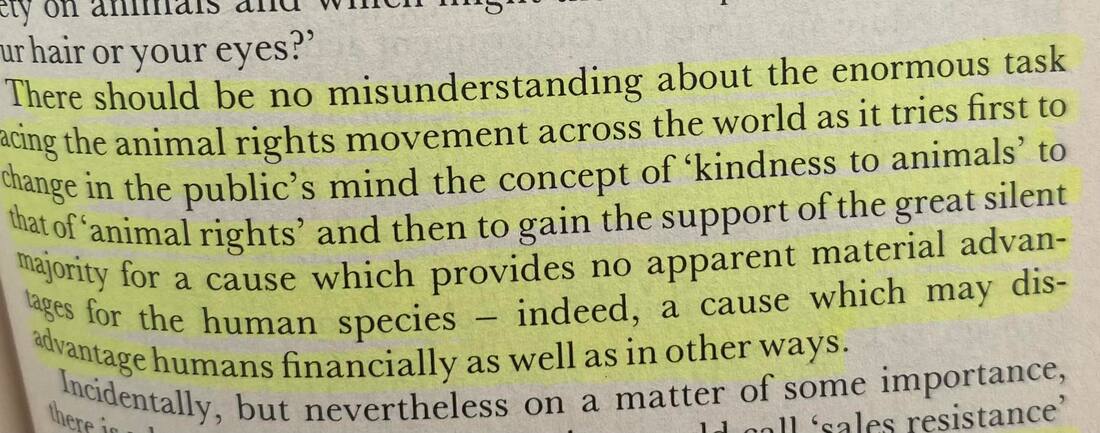
The words above were published in 1985 - and were written by Clive Hollands, Director of the Scottish Society for the Prevention of Vivisection (SSPV).*

Almost 40 years later, the global "animal rights movement" has failed miserable in carrying out this task. It has failed in the first task - and not even started the second. One may suggest that things are even worse now than they were in 1985. In the 1980s, for example, movement slogans such as "Animals Have Rights" were prevalent. Tom Regan, the author in 1983 of the ground-breaking The Case for Animal Rights, was being listened to - before the animal welfare movement marginalised him and effectively silenced him.

In the 21st century, the animal movement remains utterly bogged down in the language of animal welfare, not even bothering to pay any attention to the "enormous task" Hollands saw ahead of us in the mid-80s. Most people in the modern "animal rights movement" have no idea who Tom Regan is, let alone how to make the case for animal rights. Instead, animal advocates seem to think that "animal rights" involves pointing to graphic images and calling out the "cruelty" and "abuse" they portray.

Look at the language of any organisation, large or small, old or new - or any of the "vegan influencers." Their language is drenched in welfarism: they sound little different to how the RSPCA sounds, apart from the "go vegan" tags they include.

What is the main language of the "animal rights movement" in 2024? It's RSPCA language.

Don't be Cruel,
Have Mercy,
Don't Abuse (Other) Animals,
Be an Animal Lover.


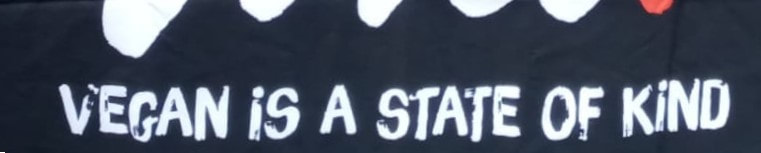
I was more than disappointed to see, only last week (end of February 2024), that the main message of an Irish "animal rights" display was, "Vegan is a State of Kind" (see below). This is a distortion of the meaning of veganism, as least as laid out by those who founded the vegan social movement in the 1940s.

"Be Kind" to other animals is an RSPCA slogan.

In 1996, in Rain Without Thunder: The Ideology of the Animal Rights Movement, law professor Gary Francione wrote: "The need to distinguish animal rights from animal welfare is clear not only because of the theoretical inconsistencies between the two positions but also because the most ardent defenders of institutionalised animal exploitation themselves endorse animal welfare."

In these terms, things are getting worse and not better. Clive Hollands' "enormous task" is simply not happening in the animal movement.

A "go vegan" label slapped onto an animal welfare message causes confusion for people who are brought up in societies saturated in the norms, values, and attitudes of cultural speciesism. There is no obvious or immediate moral connection between the welfare language of the movement and the public coming to the conclusion that they should "go vegan."

As ever, their socialised commitment to animal welfarism simply means that the public's solution is to eliminate the animal cruelty and the animal abuse (which they already oppose, and which our language suggests is our main priority too). They have these welfarist thoughts without thinking they must oppose animal exploitation and use - the animal rights message.


* In In Defence of Animals (1985), ed by Peter Singer, Blackwall, London.

Picture
1 Comment

When Two Rights are Wrong

1/12/2024

1 Comment

 
Picture
There are two friends, let’s call them the Right Brothers. One likes to see people dressing up, especially in those white costumes with the pointed hoods and holes cut for eyes. He also likes to see people dress down, especially the female of the species when they wear next to nothing and express their lack of imagination by holding up signs for men to look at - but most of the men don’t look at the signs of course.
 
Unlike his friend who likes to pretend to be a vegan, the second one is simply a Joy-ful vegetarian and a fan of Gary “I love to repeatedly think about violent r*pes” Yourofsky.
 
The friends also love lanes, especially the “stay in your” kind. They also agree on something that is, very sadly, quite pathetic. They believe that we cannot judge something unless we have a detailed historical knowledge of it. People cannot possibly oppose the blowing up innocent children by an army, they agree, because the reason hundreds of bombs are being dropped on small children is, well, “complicated.”
 
It is not acceptable for vegans, for example, to argue against dropping bombs on innocent children simply as a matter of justice. Don’t call for a ceasefire because the population of the bombed area are all “abusers,” even – apparently – the new born infants and the young who are being massacred in their thousands. We cannot protest the amputation of children's limbs, often without any pain relief at all, because we just aren't aware of all the political ins and outs. 
 
Where the Right Brothers come unstuck is when they oppose the human use of other animals. In this case, it appears that no historical knowledge is required. Seemingly, no precise details are needed before the condemnation of this killing. No, there is simply “no excuse” for this form of mass killing. No appeals to culture or religious tradition is satisfactory here.
 
The Right Brothers are a little lost when it comes to vegan animal rights. The Right Brothers are wrong. Don’t be like the Right Brothers.

1 Comment

The Use of Terms like "Animal Cruelty," "Animal Abuse" and "Animal Abuser."

12/26/2023

2 Comments

 
Picture
Many vegan activists seem to fail to pick up on the cultural subtleties and nuances of the language they chose to use in their vegan education advocacy.

The dominant terms currently employed by vegan animal advocates - and this has been the case for several years now - are "animal cruelty," "animal abuse," and "animal abuser." Jeremy Hess has suggested that, as a result, a "linguistic gap" has developed between the way most people talk and think about such terms and the way vegans talk and think about them. 

Cultural speciesism has its own way of thinking about words such as animal "cruelty" and animal "abuse." Most people, in their sedimented cultural understandings of these terms, which in turn is reflected by traditional animal welfarism in the shape of, for example, the RSPCA, are certain that they are neither cruel nor abusive to other animals. Many of the people vegans will label as cruel to other animals, or as "animal abusers," will regularly speak out against animal cruelty and abuse; they will sign petitions about these issues, and volunteer at animal shelters in order to deliberately shield other animals from these things. Vegans may have good reasons to think that such people are "cruel animal abusers" - but the dominant socially- and generationally-transmitted culture says that they are not. Emphatically not.

Such terms are culturally restricted, largely, to the treatment of those other animals used as pets but will often spill over to other areas of animal use if "unnecessary suffering" is caused or is involved. Cultural speciesism says that the standard use of other animals is simply not cruel and is not abusive. If vegans want to shift the paradigm on this, they need to recognise that they are using established welfarist language in this conversation, and not the language of animal rights. We have to acknowledge that welfarists and speciesists "own" these terms, so to speak, in order to talk to them about changing their definitions of them.

It does little good to simply call people "cruel" or "abusers" because those accusations are culturally incoherent and create this "linguistic gap" between speciesist people and vegan advocates. Speciesists and welfarists have "owned" these terms for many generations, so banally calling such people names that their culture flatly refuses to see them as, is futile. If we are going to insist of continuing to use RSPCA words and phrases, then we must accept that they are overwhelmingly defined by the orthodox - and not in the way vegans would like.

If activists and activist groups insist on complaining that RSPCA or Red Tractor welfare standards, for example, are being ignored, they will do well if they fully embrace the fact that their claims - and the ways that their claims are generally understood and reported - are from within the welfare paradigm.

Picture
2 Comments

In Love With (Other) Animals

7/15/2023

0 Comments

 
Picture


​

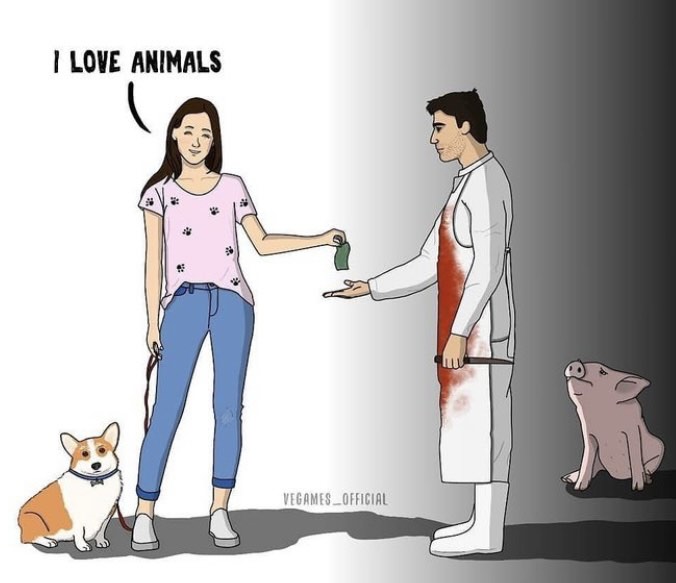
Owning a "pet" and eating different other animals ("food animals") are two types of animal use. However, socially constructed attitudes about these categories differ considerably.

For example, it is common - universal probably - to name other animals we use as pets. We acknowledge their individuality in this way. We also tend to refrain from calling those in the pets category "it," even if we may routinely call most other animals "it" as a general matter.

One major difference in the way we view these different forms of animal use involves the notion that we "love" one type, even when they are alive, and only (in a sense) "love" the other type once they have been killed and cooked.

In line with how the animal user industries prefer it, most consumers do not think of those they eat as individuals - and neither does the industry. They regard them as "units of production" and "stock" (or "livestock.") They are not named and they are not "loved" (although the representatives of animal farming interests will try to suggest otherwise.)

We kill these categories of animal use differently too. The "loved" ones are taken to a vet, whereas the "food animals" are forced to go into a slaughterhouse.

When we begin to populate these categories, different types of other animals are chosen (generally speaking - this alters across cultures). For example, in the "pet" category of animal use, we place dogs, cats, horses and ponies, some birds, some types of fishes, and some of the smaller mammals such as guinea pigs. In the "food animal" category of animal use, we include beings such as pigs, chickens, cows, some fishes, and some other types of "seafood."

As suggested, lines get blurred across cultures and, even in the same cultural setting, some of the "pets" may end up classified for other forms of animal use, such as "working dogs" or "therapy animals." On rare occasions, some individuals usually classed as "food animals" end up in the "pet" category, as do exotic free-living beings.

This is where cultural speciesism plays a neat trick. For although everyone knows that, in fact, "food animals" are actually animals, they become somewhat invisibilised within that general category. "Pets," on the other hand, are always openly acknowledged as "animals."

Do I have examples, you ask. I do, I answer.

For example, when writing my Ph.D, I put a call out on an early internet campaigner's forum asking for examples of what could be called, "attitudes to (other) animals."

One reply was about a group of teenagers who approached an "animal rights information table." In conversation, they declared that they did not eat other animals, although none were vegan, nor even vegetarians. It transpired that they all had fully bought into the cultural invisibilisation of "food animals."

They said that "animals" were "things like cats and dogs." Although they described these other animals as "things," they nevertheless saw them as "proper animals," they said. Farmed animals, on the other hand, were not "proper" and, therefore, should not be counted as "proper animals." They were merely dismissed as, "things that taste good."

In exactly the same month in 1999, journalist Julie Burchill wrote about being "mad about animals." However, she wanted to clarify what she meant - that is, "when I say 'animals,' I don't mean the poor brutes bred for food and I don't mean wild animals you see on TV... No, what I mean, of course, is pets - dogs and cats, but cats in particular."

Therefore, even as she provided some clarification, she knows that - really deep down - "of course" - her readers knew all along that she was making this category difference.

What this means is that we grow up being taught about these category games and we begin to understand that our attitudes to other animals are closely linked to the function that we make them play in society or in "the wild." This functionalist orientation dictates our view of other animals in terms of what use we put them to - and what moral and/or financial value we assign to them.

As we have seen, some we use as pets - some we use as food. These are simply the functional differences we impose on them, along with the "use variations" discussed above.

And this, dear vegan activists, is why the idea of challenging speciesists on their animal use in terms of "loving one and eating another" doesn't always seem to turn out to be as a useful as we assumed it would - and should.

For example, when I see vegan activists doing street interviews about attitudes to "animal abuse," they often become unstuck when they switch the animal species being talked about. They may start by asking the public if they oppose "animal abuse" and, of course, everyone says that they do. We get the first evidence of the strength of cultural conditioning once the activist asks for examples of "animal abuse." Kicking dogs and cats, and beating horses may be the most common answers.

The activists and the public are reading from the same cultural hymn sheet at this early stage. Then activists try the "species switch" and suddenly everything changes, and not for the better. People are confused and, as often as not, immediately defensive. Sometimes offended; sometimes angered and hurt. What began as a discussion with a high level of agreement quickly transforms into a confrontation based on taught cultural understandings.

Often, just as with the teenagers above, people get tripped up by the categories games that they know so well. They know full well what "animals" are - dogs and cats, and those few others whom a historian has called "privileged species." They also know full well that they firmly oppose the abuse if not the use of animals. They might says, "I though you were asking about animal abuse?" When activists reply that they are talking about "all animals," the public are confused afresh because they also think that they are talking about all other animals.

If the activist tries to clarify the situation by talking about the other animals who are routinely taken to slaughterhouses and killed, the confusion persists and often, at this point, the conversation is over. Members of the public may think that they have been duped or tricked in some way - and no vegan education is possible from this time onwards.

While a vegan audience watching online may appreciate these "educational" encounters, I'm not at all sure that these "gotchas" operate as a successful means of getting people to think about the philosophy of veganism.


0 Comments

Alex O'Connor and the Animal Movement's Failure

3/17/2023

1 Comment

 
Picture
  • I have been extremely perplexed at the amount of hand wringing that has occurred over Alex O'Connor's (Cosmic Skeptic) recent announcements that he is "no longer a vegan."

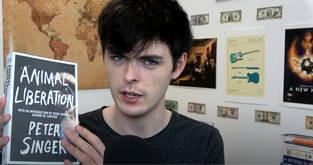
It is not actually possible for someone who was never a vegan to be "no longer a vegan." Who said Alex O'Connor was never a vegan? Well, Alex O'Connor did - repeatedly - but the movement failed to listen to him.

​The video below from Perspective Philosophy shows that Alex O'Connor was neither a vegan nor an animal rights advocate. In fact, because O'Connor does not believe in rights - including all animals' rights, including yours dear reader - and because he thought that the Vegan Society definition of veganism was way too strict, he repeatedly redefined it in order for it to become what he wanted veganism to mean.

Bear in mind that the video below was released when O'Connor had been a reluctant "vegan" for just over two years.

He kept redefining veganism to mean an attempt to reduce the suffering of other animals. One word in the definition he rejected - and therefore ejected - from his personal definition of veganism was "exploitation." Sadly he is not alone in this. Many vegans appear to omit this word from the definition or, even if they do include it, they place it second to the word "cruelty," thus weaking and diluting the definition.

In organisational terms, Alex O'Connor disliked the fact that veganism is an abolitionist philosophy - standing for, and advocating for, the end of all animal use. He therefore conceived of The Vegan Society as some modern-day version of the RSPCA and nothing to do with animal liberation and, much more than that, absolutely nothing to do with the dread idea of animal rights.

As Perspective Philosophy explains below, by routinely reducing and weakening the definition of veganism, he was able to reason that vegans can kill and eat other animals as he insisted that they do not have a right to life.

The real question is this: why did the animal movement put up with O'Connor's nonsense for two or three years rather than listen to the critique of his vegan reducetarianism such as the one below? Had O'Connor chosen not to be honest and had hidden his consumption of products derived from other animals, camp outs and conferences would still be cheerfully hosting him and facilitating the spread of his non-vegan anti-animal rights stance.


So, animal movement, can we please stop getting ourselves in a knot over a non-vegan who eats products derived from other animals?

Thanks a mil.

On language: both Alex O'Connor and Perspective Philosophy use speciesist language.

1 Comment

Social Movement

10/14/2022

0 Comments

 
As this speech from Professor Steve Best comes up to it being ten years old, it strikes me how much things have changed in the last decade.

With so much emphasis now on careers, individuals, psychology, being an "influencer," the continued growth of the welfare corporations, etc., one wonders if Best's language of social movements, alliance politics, and ideological ideas registers any more.
0 Comments

Foul-Mouthed Veganism

4/26/2022

2 Comments

 
Picture
The march to create a vegan movement that resembles the RSPCA (the Royal Society for the Prevention of Cruelty to Animals) continues apace – or so it seems to me. 
 
Social movement theory warns us that, once social movements grow, their core values may be placed in danger. Is this happening to the vegan social movement? Has it already happened? 
 
All I hear now are foul-mouthed vegans using the dread c-word. Cruelty this, cruelty that, cruelty the other. I’m heartily sick of the damn word! 
 
This welfarist language is now largely dominant in the vegan movement. On platforms such as TikTok, cruelty is about the only word one sees or hears in relation to what humans do to other animals. I see advocates frequently saying things such as, “veganism is a stance against animal cruelty.” Ask a modern-day vegan why using other animals is wrong and most will reply suggesting that animal use is “cruel.” We seem to have lost the ability, to the extent that we ever had it, to make the case for animal rights, so we rely on moral shocks laced with welfarist language.  
 
Never likely to say, or even think about saying, that all animal use is a rights violation, we’ve ended up saying that all animal use is uniformly cruel. Of course, much of it is cruel but, as animal rights philosopher Tom Regan points out, cruelty levels are not the fundamental wrong.  
 
This welfarist focus has led to vegan “influencers” saying that veganism is about “reducing animal suffering,” “abolishing the worst forms of animal abuse,” and getting into debates with slaughterhouse owners about the percentage of times the stunning of other animals fails. Reducing suffering, tackling worst cases, improving slaughterhouse practices. This is exactly what the RSPCA is concerned with. 
 
This is what the British Vegan Society says veganism is 

 
"Veganism is a philosophy and way of living which seeks to exclude—as far as is possible and practicable—all forms of exploitation of, and cruelty to, animals for food, clothing or any other purpose; and by extension, promotes the development and use of animal-free alternatives for the benefit of animals, humans and the environment. In dietary terms it denotes the practice of dispensing with all products derived wholly or partly from animals." 
 

This is the definition of veganism that most vegans appear to use, although it seems that most do not include even the first sentence in full. Instead, they tend to end at the phrase, “...and cruelty to, animals.” When they talk about the meaning of veganism, the phrase “exploitation of” tends to disappear, as does, often, the word “philosophy.” 
 
By the way modern-day vegans talk about veganism, they seem happiest with the idea that the definition of veganism reads: “Veganism is a way of living which seeks to exclude – as far as is possible and practicable – all forms of cruelty to animals.” Exactly the way the RSPCA sees the world. 
 
Of course, the growing contingent of “animals only” vegans apparently and absolutely hate the reference in the full definition to benefitting humans, so that never gets mentioned. 
 
This means, of course, that many modern-day vegans are totally out of step with the way veganism was thought of by the people who began the vegan social movement and who, indeed, coined the word. The vegan movement’s founders saw themselves engaged in a collective cause to bring about the moral evolution of humanity for the benefit of all sentient life - and the planet. 
 
The full definition I’ve cited above came about between the years 1979 and 1988. I regard it as a weaker statement about the meaning of veganism than those that went before. However, this definition does include the word “exploitation” (in the sense of – at the very least - the human exploitation of other animals). That word was favoured by the movement’s founders; the very word that many vegan newbies reject. 
 
Moreover, the word “exploitation” comes before the word “cruelty,” even in the 1979-1988 definition, not that anyone would know by the way vegans talk nowadays. 
 
What social movement theory warns us about – a process of moderation – is occurring within the vegan social movement it seems to me. Essentially, a once-radical, even revolutionary, idea is being neutered by welfarist moderates, and to such an extent that even the grassroots is now using traditional welfare language to describe vegan aims. 
 
Cultural Speciesism 
 
The human use of other animals – and the attitudes that support such use – is a structural matter. The values of speciesism are embedded into the very fabric of society. The use of other animals is institutionalised. It is not the case that the vegan movement is faced by a few cruel individuals who do cruel things to other animals. The problem is much deeper than that, sadly, and that means the problem is much harder to fight against. We are fighting against cultural speciesism. 
 
What all vegans need to appreciate – and I would venture to suggest, the newer vegans the most – is that the ideology of animal welfarism is part and parcel of cultural speciesism. Cultural speciesism and animal welfarism are values that are generationally transmitted in society through the processes of socialisation. 
 
In other words, generations of humans are brought up to believe a set of interrelated values. The basic idea is that animal use is not wrong because animal use can be (and largely is) done in a non-cruel way and it is animal cruelty – when it occurs - that is wrong. We are all, by and large, taught “don’t be cruel” as children. However, “don’t be cruel,” and “cannot use” (cannot eat, wear, own, test upon, etc.) are not connected in the general cultural imagination. 
 
It may be the case that vegans see a direct link between “don’t be cruel” and veganism but that is not the way cultural speciesism informed by animal welfarism sees it at all. There was outrage in vegan circles recently when the RSPCA was “exposed” for not being a vegan organisation. Of course it is not a vegan organisation! Never has been, and never pretended to be. What many vegans appear to have done is see the word “cruelty” in the “Prevention of Cruelty to Animals” name and simply assumed their anti-cruelty position implies veganism. 
 
There is no such linkage in people’s minds, nor in the culture that directs those minds. What “don’t be cruel to animals” means is what we all are taught through socialisation. Don’t kick your cat or dog (animal property) but that has nothing to do (culturally) with eating fishes and chickens. The RSPCA are far more likely to say this than “go vegan.” 
 
Of course, vegans may argue that they are trying to effect cultural speciesism – which is true – and to create a strong linkage between “don’t be cruel” and veganism. If vegans take that line, their disadvantage is based in the reality that such conversations occur within the dominant paradigm: speciesism informed by welfarism, and articulated by traditional animal welfare groups such as the RSPCA.  
 
I contend that discourse within the dominant welfarist paradigm is likely to prevent people from thinking about veganism. Why should they think of veganism if all they are asked is not to be cruel to other animals, a value they already agree with? The dominant view about eating other animals, for example, is that, while consuming them is not a moral issue, being cruel to them is. Therefore, and all vegans know this, people explore ideas like “free-range” and “humane” farming, seeking out that thing their culture has promised them: non-cruel animal use. They know that non-cruel use is possible and “out there” somewhere, it is simply an issue of finding it. The “it” is not veganism. 
 
I suggest that a clearer and an unequivocally more direct line to veganism comes from the philosophy of animal rights, not through the messy corridors of institutionalised animal welfarism. Animal rights demands that other animals are regarded as rights bearers and demands respect for that status. It says that, when humans use other animals for any purpose, they commit violations of other animals’ rights. 
 
As I suggest, animal rights is a demand. It does not beg people to “not be cruel” to other animals, nor does it beg for “mercy.” To my dying day, I will contend that whoever came up with the group name of “Mercy for Animals” is an absolute monster. Well, perhaps monster is too strong. There must be another name, equally damning. Ah, yes, of course: welfarist.


2 Comments

Radicals & Revolutionaries: Thanks to Tylor and Jake for my Recent Interview

4/9/2022

0 Comments

 
Picture
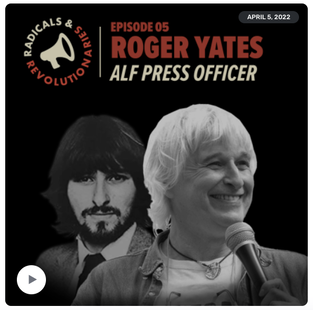
"As the Animal Liberation Front exploded (literally and figuratively) onto the scene, the desire for the clandestine organization to have a public mouthpiece grew bigger. And so the ALF Press Office was born.

"Born in 1957, Roger Yates would find himself quickly drawn towards direct action by the attitudes, philosophies and actions of, you guessed it, the Hunt Saboteurs Association. (Are you picking up on a trend here?)


"At the request of Ronnie Lee, Roger became the ALF Northern Press Officer which would eventually lead him to facing years in prison on conspiracy charges. But Roger had other plans…"

HERE'S the Roger Yates episode.


0 Comments

Radicals & Revolutionaries feature Ronnie Lee

4/2/2022

1 Comment

 
Picture
My old - very old - mate, Ronnie Lee is the second guest of the new Radicals & Revolutionaries Podcast series.

"At the beginning of the Band of Mercy and the Animal Liberation Front, someone liberated that first animal and struck that first match. And it was Ronnie Lee.

Born in 1951, Ronnie would become interested in veganism and the world of animal rights by seeing a TV program in the early 70’s about the Hunt Saboteurs Association. He would soon join, and launch his own chapter, sometimes sabbing by himself.

But he realized that if you could keep the hunt from leaving in the morning by sabotaging their equipment and vehicles, you wouldn’t even need to be in the fields. So in 1972 the Band of Mercy was born. Starting out with low level attacks on hunt vehicles and kennels, he and his friends turned it into a crusade against all animal use. By 1976, they had become the Animal Liberation Front, and as they say, the rest was history."

RONNIE LEE (part one) - "
And then we had heard about a vivisection laboratory that was being built and we used to go hunt sabbing in that area. “Oh blimey! That’s quite a lot of it there now…” We happen to have a gallon of petrol, of gasoline in the – in our car. So we thought “Well, why don’t we have a go now?” Y’know? So we sloshed it around in the annex, and threw a couple matches down, and it went up – woosh! And we made our getaway!"


RONNIE LEE (part two) - "I was arrested in ’86, and charged with conspiracy – charged with conspiracy to cause arson, to cause criminal damage and to incite other people to cause criminal damage. I didn’t do the damage myself, what I did was encouraged other people to do it. They said “oh, we suspect that Mr. Lee dabbled himself in this action,” which I did, a lot! But they couldn’t prove it!"

Picture
1 Comment
<<Previous

    Roger Yates

    Dr. Roger Yates is a rights advocate and sociologist

    Archives

    March 2023
    October 2022
    April 2022
    March 2022
    February 2022
    September 2021
    June 2021
    March 2021
    February 2021
    January 2021
    November 2020
    October 2020
    August 2020
    July 2020
    June 2020
    April 2020
    March 2020
    February 2020
    January 2020
    December 2019
    November 2019
    July 2019
    June 2019
    May 2019
    April 2019
    March 2019
    February 2019
    January 2019
    November 2018
    October 2018
    August 2018
    June 2018
    May 2018
    February 2018
    January 2018
    November 2017
    October 2017
    August 2017
    July 2017
    June 2017
    May 2017
    April 2017
    March 2017
    February 2017
    January 2017
    December 2016
    November 2016
    October 2016
    September 2016
    August 2016
    July 2016
    June 2016
    May 2016
    April 2016
    March 2016
    February 2016
    January 2016
    December 2015
    November 2015
    October 2015
    September 2015
    August 2015
    July 2015
    June 2015
    May 2015

    Categories

    All
    1980s
    Aaron Yarmel
    Ableism
    Ableist Language
    Abolitionising Single Issues
    Abolitionising Single-issues
    Alliance Politics
    Always For Animal Rights
    Amnesty International
    Anarchy
    Andrew Linzey
    Angela Barnes
    Angus Taylor
    Animal Aid
    Animal Equality
    Animal Liberation
    Animal Liberation (book)
    Animal Liberation Front
    Animal Pity
    Animal Rights
    Animal Rights Conference (Luxembourg)
    Animal Rights Movement
    Animal Rights Philosophy
    Animal Rights Show
    Animal Rights Zone
    Animals Property & The Law (book)
    Animal Welfare
    Anna Charlton
    Anthony Giddens
    Aph Ko
    AR2012
    ARCNews
    Arthur Ling
    ARZone
    A Sociology Of Compromise
    Autobiography
    Avoiding Unpleasure
    Award
    Backlash
    Barbara DeGrande
    Barbara McDonald
    Barbara Noske
    BBC
    Being Dogmatic
    Bernard Rollins
    Bloom Festival
    Bob Linden
    Bob Torres
    Brian Kateman
    Bristol
    Bruce Friedrich
    Buddhism
    Calf Food
    Capitalism
    Carl Cohen
    Carnage (film)
    Carol Adams
    Case For Animal Rights (book)
    Chris Powell
    Christie Davies
    Christopher Lasch
    CIWF
    Claims Making
    Claims-making
    Commodore
    Consequentialism
    Counterforce
    CRC Radio
    Critical Theory
    Cruelty
    Cultural Speciesism
    C Wright Mills
    Dave Callender
    Dave Wetton
    David DeGrazia
    David Lee
    David Nibert
    Declan Bowens
    Defending Animal Rights (book)
    Dehumanisation
    Depersonalisation
    Direct Action Everywhere
    DIY Politics
    Donald Watson
    Dorothy Watson
    Dr. Koichi Tagami
    Dublin VegFest
    Earthlings Experience Dublin
    Eden Farmed Animal Sanctuary
    Elizabeth Collins
    Elsie Shrigley
    Emotional Lives Of Farm Animals (film)
    Encouraging Vegan Education (EVE)
    Erik Marcus
    Ethical Vegetarian Alternative
    Eva Batt
    Fairness (concept)
    Farm Kind
    Faye K Henderson
    Federation Of Local Animal Rights Groups
    Frankfurt School
    Freshfield Animal Rescue
    Freud
    Friedrich Engels
    Friends Of The Earth
    Funding
    Funding Appeal
    Fur
    G Allen Henderson
    Gandhi
    Gary Francione
    Gary Steiner
    Gary Yourofsky
    Geertrui Cazaux
    Geertui Cazaux
    Gender
    George Herbert Mead
    George Paton
    Gerry Kelly
    Ginny Messina
    Go Vegan Radio
    Go Vegan World
    Govinda's
    Grassroots
    Hannah Arendt
    Hans Ruesch
    Harold Brown
    Harold Guither
    Hazleton Action Group
    Hazleton Laboratories
    Henry Salt
    Herbert Marcuse
    Herbivores
    Horse Ripping
    House Of Fun
    Howard Newby
    HSUS
    Humanitarian League
    Human Liberation
    Human Rights
    Human Rights Watch
    Humour
    Internet Age
    Intersectionality
    Interviews
    Introduction To Animal Rights (book)
    Irish Times
    Jackson Katz
    Jake Conroy
    James Rachels
    Jeremy Hess
    Jill Phipps
    Jim Mason
    Joan Dunayer
    John Bussineau
    John Fagan
    John Robbins
    Jon Hochschartner
    Jordan Wyatt
    Josh Harper
    Julian Groves
    Jurgen Habermas
    Justice
    Karin Ridgers
    Karl Marx
    Kath Clements
    Kathleen Jannaway
    Kay Henderson
    Keith Akers
    Keith Mann
    Keith Tester
    Keith Thomas
    Kim Stallwood
    Knowing Animals
    Language
    Lauren Ornelas
    League Against Cruel Sports
    Leslie Cross
    Let's Rage Together Podcast
    Linda McCartney
    Lynne Yates
    Macka B
    Mainstream
    Mammals
    Marjorie Spiegel
    Mary Midgley
    Mass Media
    Matt Ball
    Matthew Cole
    Maureen Duffy
    Max Weber
    McDonaldisation
    McDonald's
    Meat Free Monday
    Meat-free Monday
    Meat Reducing
    Media
    Media Sociology
    Melanie Joy
    Mercy For Animals
    #MeToo
    Michael Dello-lacovo
    Milk
    Milton Mills
    Moral Baseline
    Moral Maze
    Movement Crisis
    Movement For Compassionate Living
    Movement History
    National Animal Rights Association
    National Anti-Vivisection Society
    Neil Lea
    Neil Robinson
    Neville The VIP Van
    Newsjack
    News Quiz
    Newstalk Radio
    "New Welfare"
    Nick Fiddes
    Nick Pendergrast
    Norman Fairclough
    Numbers
    NZ Vegan
    Palm Oil
    Patreon
    Patriarchy
    Patrice Jones
    Paul McCartney
    Paul Sauder
    Paul Watson
    Paul Willis
    People For The Ethical Treatment Of Animals
    PeTA
    Peter/Brigitte Berger
    Peter Singer
    Philosophy
    Piaget
    Piers Beirne
    Pigeons
    Pippa Evans
    Plague Dogs
    Plamil
    Podcast
    Poetry
    Pornography
    Poverty Of Ambition
    Power
    "professionals"
    Progressive Podcast Aus
    Prostitution
    Purity
    Rachel Carson
    Racism
    Radicals & Revolutionaries
    Radio 5 Live
    Radio Debate
    Rain Without Thunder (book)
    Real Veganism
    Reducatarianism
    Reducetarianism
    Resilience Of Orthodox
    Richard Adams
    Richard Gale
    Richard Ryder
    Rights (legal)
    Rights (moral)
    Rights (natural)
    Robert Garner
    Ronnie Lee
    Rosemary Rodd
    RSPCA
    Ruhama
    Ruth Harrison
    Sandra Higgins
    Scandals
    Sea Shepherd
    Sebastian Joy
    Sexism
    Sex Roles
    Sexual Politics Of Meat (book)
    Sex Work
    SHAC
    Simon Amstell
    Simon Redfearn
    Siobhan O'Sullivan
    Slaughterhouse
    Slaughter Of The Innocent
    Social-change
    Social-constructionism
    Socialisation
    Social-justice
    Social-movements
    Social-movement-theory
    Sociology
    Speciesism
    Stacia-leyes
    Stanley-cohen
    Stanley-milgram
    States-of-denial-book
    Stephen-clark
    Stephen-clarke
    Stephen Nolan
    Steve Best
    Steve-christmas
    Steve-kangas
    Steven-sapontzis
    Subjectsofalife
    Sue-coe
    Tavs
    Teagan-kuruna
    Ted-benton
    Thanksgiving
    The-animals-film
    The Bloody Vegans
    The-case-for-animal-rights-book
    The-now-show
    The-species-barrier
    The-vegan-magazine
    The-vegan-news-1944
    The-vegan-society
    Thrive Vegan World
    Tik Tok
    Tim-barford
    Tina Cubberley
    Tobias Leenaert
    Tom Regan
    Tom Warby
    Total Liberation
    Trafficking
    Turkeys
    Unnecessary Fuss
    Utilitarianism
    Vegan
    Vegan Buddies
    Vegan Education
    Vegan Education On The Go
    Vegan Information Booths
    Vegan Information Day
    Vegan Information Days
    Vegan Information Project
    Veganism
    Vegan Outreach
    Vegan Pioneers
    Vegan Pioneers Rock!
    Vegan Radio International
    Vegans
    Vegan Social Movement
    Vegan Society
    Vegetarianism
    Vegfest Express
    VegFestUK
    Victoria Moran
    Victor Schonfeld
    Video Talk
    Violence
    Wayne Hsiung
    Wendy McGovern
    World Vegan Summit
    You Caring
    Zami
    Zoos
    Zygmunt Bauman

    RSS Feed

Powered by Create your own unique website with customizable templates.