On Human Relations with Other Sentient Beings
  • Home
  • The Blog

An Accepted Good

8/17/2015

0 Comments

 
Picture
This blog entry is designed to further explore sociological understandings of human-nonhuman relations. Its focus, once more, is on the powerful societal role played by institutionalised animal welfarism. 

Essentially, animal welfarism serves to regulate and control the human use and systematic exploitation of other animals while rarely attempting to totally end such use and exploitation. This is certainly true of orthodox forms of animal welfarism, while post-1970s "new welfarism" (law professor Gary Francione's controversial term) insists that step-by-step reform of exploitative practices may eventually abolish use, an ideological assertion disputed by abolitionist animal rightists. 

From a sociological point of view, animal welfarism cannot be solely regarded as simply a set of legislative interventions enacted from the beginning of the nineteenth century to control, regulate and enforce the “humane use” of other animals. Orthodox animal welfarism undoubtedly seeks to perform its regulatory function: it regulates exploitation, while user industries can cope with welfare reforms if profits are not seriously dented - and yet animal welfarism appears to do far more than this. For example, it operates as a firmly entrenched institutionalised ideology that effectively helps to promote and maintain the value of “kindness to animals,” and an ethos of “caring for” or “loving” nonhuman animals, while at the same time justifying routine harmful practices and time-honoured social attitudes. 

As for user industries, it does them no real harm to be seen to respond to welfarist considerations – after all, they routinely claim the status of concerned welfarists, and they routinely reply to rights-based claims with animal welfare assurances. Typically, when animal welfare modifications are afoot, they spend a small proportion of their vast fortune initially opposing all reform attempts. Some fights they win, a few others they lose. However, aware of the transient nature of public attention, even in the latter cases, user industries can subsequently gain promotional benefits by characterising themselves as “animal welfare friendly” or “humane” - and all the better if they can secure ringing endorsements from former opponents in the national animal welfare corporations, which seem to come ever more frequently. 

The apparent transience of public attention is matched by its failure to fully focus on precise detail. This is one major reason why modern-day politics is based on short ~and oft repeated~ sound bites. Likewise, public inattention also helps to explain why Francione, talking to Vegan Freaks Radio a few years ago, that his university colleagues assumed, due to PeTA’s promotion of McDonald’s limited welfare reforms, that the whole of McDonald’s range was to be considered “humanely produced.” 


They even thought that Francione himself would be eating there. 

Sociologists who study the mass media warn that there is an important issue of the encoding and the decoding of messages and – even in the age of the internet, the mass media are still the source of most people’s knowledge of the news. In other words, while PeTA may believe they clearly highlighted the limitations of the McReforms, that in itself does little or nothing to guarantee that audiences will receive the message “as sent.” 

In general terms, animal welfarism is the accepted societal lens through which moral issues raised by the treatment of other animals are made sense of. Animal welfare opinion is so commonplace, and so firmly sedimented in the public consciousness, that regarding human-nonhuman relationships in any other way is most unusual and exceptionally difficult, even for “pro-animal organisations” and individual campaigners in the nonhuman advocacy movement. Therefore, ideological animal welfare has not only served to regulate exploitation but has also, for generation after generation, been a central support system justifying and excusing what humans have done ~and continue to do~ in the name of science, agriculture, and entertainment. 

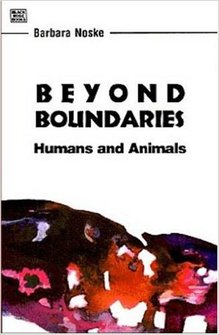
Conventional animal welfarism - the very name implies as much - is generally seen in a positive light. It is so firmly entrenched in the modern cultural imagination that it is regarded, according to research fellow at the University of Sydney, Barbara Noske, as “an accepted good in Western society.” Furthermore, as stated, effective animal welfare legislation and “good welfare practice” has always been claimed, increasingly so in recent years, as the most serious concern - often the number one interest - of those who themselves wish to actively exploit nonhumans as a commercial or “sporting” resource. In other words, it is fairly rare to find even animal users who do not regularly articulate fervent support for the concept of orthodox forms of animal welfarism. 

Since the emergence of animal rights philosophy represents both a radical rejection of the human use of other animals and also a fundamental challenge to its regulatory mechanisms, conventional animal welfarism responds to rights-based claims ideologically. It responds with a generalised charge that rights-based approaches are “unwarranted interferences,” “extreme opinions” and, most of all, “unnecessary ideas.” New welfarism reacts in a similar but not exactly the same way. 

Thinking about rights and welfarist approaches to human-nonhuman relations means thinking about very different approaches to the subject, whereas traditional and new welfarists simply locate themselves in different places on a continuum that starts at least with regulating use. Essentially, traditional animal welfarism suggests that any desire to go beyond its own established precepts makes no sense, and serves no positive function, not even for nonhuman animals. New welfarists join in with pejorative claims about “utopianism” and “impracticality,” while having abolition as their end game. Not only does animal welfarism stand like a monolith to inform the vast majority of discussions about human-nonhuman relations, fundamental and historical social conventions, and routine practices, gives succour to mainstream, society-wide, views that firmly state that:-

(1) human beings are entirely justified by many religious and philosophical canons in their use of other animals for their own purposes and 

(2) this exploitative use, precisely because it is thought to be strictly controlled and regulated, can be properly regarded as ethically acceptable since the animals so used do not actually suffer in the course of their usage.


Fundamental social “truths” concerning human-nonhuman relationships are thought to be ~and repeatedly asserted as~ so self-evident that the norms and values which support mainstream views about other animals are unconsciously, and without controversy, transmitted on a daily basis at every level of primary, secondary and adult socialisation. 

Put simply and directly, human beings in western societies are socialised to become animal harming animal lovers. 

Since the “normal,” “justified,” and “proper” use of other animals is a central feature of western cultures, the apparent self-evident character ~and the unequivocal “correctness”~ of these embedded social attitudes means that any challenge to them can almost automatically be regarded as unneeded, beyond the pale, unreasonable, invalid, irrational and even “dangerous.” 

Claims from animal rights positions state that society is so prejudiced on the basis of species membership that, fuelled by notions of “human chauvinism,” most people quite unproblematically instil speciesist ideology into children day after day, week after week, year upon year. They do this through routine discourse and everyday social practices - most obviously, at every mealtime (although the majority of speciesist parents do not appear to go out of their way to tell their children what ~i.e., who~ they are eating). 

Similarly, speciesist sentiments are culturally transmitted in common stories told to children, and can be seen reflected beyond food choices, for example in clothing, social rituals, forms of entertainment and social gatherings. In terms of what children learn about human orientations toward other animals, the vast majority of youngsters are effectively socialised as speciesists well before they can be regarded as ethically aware individuals. In other words, most children are encouraged to participate in organised animal-harming activities (again, for example, at every mealtime) prior to developing the ability to morally evaluate what they are brought up to do with nonhuman property and animal produce. 

Furthermore, they are routinely exposed to, and enticed to believe, the justifying ideology that accompanies the human exploitation of nonhuman “resources” – yet again, well before they know for themselves what their own and others’ conduct entails for the lives (and, of course, the deaths) of other sentient beings. Indeed, in effect, adults may feel pressure to mislead their own children, or just lie to them, about the starkest realities of many human-nonhuman relationships. 

This suggests that many parents may feel the need to obscure many of the details (if they know them) of what happens to the animals their children consume, especially those animals consumed as food. After all, who really wants to know the ins and outs of what humans do to other animals when they exploit them? Ironically, an average vegan is likely to know much more about how a piece of an animal’s muscle arrived on a flesh eater’s plate than most meat eaters.

The danger of the new welfarist approach to human-nonhuman relations is that it misleads the public into thinking that caring about nonhuman animals amounts to picking and choosing between different animal production systems. Pay a little extra, and look out for our endorsements, new welfarism seems to say, and then it points the public to animal produce they should eat and to those products they should not. Surely, openly advocating veganism as the baseline position of animal rights is much better ~and even simpler~ than getting our feet wet in such muddied waters?
0 Comments

Language, Power & Speciesism

7/16/2015

0 Comments

 
Picture
Last month I had the pleasure of presenting to an informal philosophy discussion group that meets in Dublin.  The group had requested that I focus on some sociological work on the issue of power in society.  I wanted, in part at least, to include the “critical language studies” perspective of Norman Fairclough, especially as outlined in his 1989 book Language and Power.  While many sociological accounts of power begin with Max Weber, I decided to place Fairclough’s work in the wider sociological perspective provided by Peter and Brigitte Berger.  Their “biographical approach” to sociology takes us through a human life story – from birth to death – and makes sociological points about every stage: in terms of teaching sociology, I’ve found it particularly useful for classes of “mature” students.  In the course of the presentation, I realised that my focus on power and language speaks to what goes on in the animal advocacy movement in terms of (mis)understanding power relations reflected in language and in terms of not systematically challenging the dominant linguistic paradigm which is deeply speciesist in nature.

There is a rich sociological analysis of the role of social movements in civil society, including a long-standing programme on the subject initiated and run by the United Nations Research Institute for Social Development.  In general terms social movements are seen as examples of popular political action. They may be regarded as a major threat to prevailing power relations, or seen as subject to domestication – “bought off” perhaps – within social contract ideologies.  Popular political action may occur for a variety of reasons which can range from issues like the limitations of democratic systems, problems that arise within democratising societies, felt grievances, anger against injustice, and countermovement activity.  In a more Foucauldian sense -in that power may be considered to be diffused throughout the fabric of society- social movements may represent and attempt to articulate the values of certain social constituencies at particular times.  As a general matter, social movement analysis acknowledges on some level that power or social influence is embedded in language and language use; and sees social movements as playing a role in challenging - or upholding - the language traditions that tend to be an important constituent part of the concerns of social movement mobilisation.

It occurred to me as I prepared for my presentation that the animal advocacy movement has not been particularly good at challenging the dominant language forms of human-nonhuman relations, although the influence of how we speak about human relations with other animals is clear.  Attitudes about human and nonhuman animals are embedded in socialisation processes and are transmitted generationally throughout the fabric of society.  Philosopher Stephen Clark argues that human beings resist the notion that we are animals, and we hear it negatively if we hear that someone has treated another human “like an animal.”[1]  Marjorie Spiegel refers to how insulted many of us feel if compared to nonhuman animals, while Barbara Noske describes a “sharp discontinuity between humans and animals” in Western culture and discourse.  Animal behaviourist Jonathan Balcombe argues that such ideas are part of our age-old “imperialistic view” of other animals.  Even “Darwin’s Bulldog,” T.H. Huxley, subscribed to the “vast gulf” thesis that separates “manhood” and “brutes,” even though he had argued that, “man is, in substance and in structure, one of the brutes.”

‘Postmodern’ and post-structural thought is said to be posited on challenging oppositional and dualistic constructions; in the ‘postmodern’ age, rather than denying difference, the idea is tocelebrate it.  While recent academic nonhuman animal advocacy incorporates criticism of Cartesian or Cartesian-inspired dualisms, especially those of mind versus body, human versus animal, and reason versus emotion, Marti Kheel is among eco-feminist authors to point out the continuingdualistic nature of society.  To be sure, language is certainly central in the social construction and maintenance of such dualisms, perhaps especially that which concerns me the most in this paper, human versus animal.  Not only has the animal advocacy movement been exceptionally poor in terms of mounting any sort of substantive challenge to the dominant language forms of human-nonhuman relations, worse still, the vast majority of members of the mobilisation for nonhuman animals seem rather carelessly to use language constructs which are themselves speciesist - not the best way to shine a critical light on this powerful social institution.


Language as a social institution and in power relations.

Sociologists Peter and Brigitte Berger argue that language is the first institution human individuals encounter, while recognising that most people would suggest that “the family” is the first.  In a sense, both ideas are accurate and, certainly, the experience of family life is a significant part of most biographies and the location in which most of us initially learn languages and the meaning of words.  The family is the usual site of foundational primary socialisation.  However, when very young, children experience their families in ignorance of the fact that they are experiencing a family.  I remember the first birthday party of a granddaughter who appeared to have absolutely no idea that all these strange people suddenly making a fuss of her were the members of “her family.”  Some she already knew well, others were infrequent visitors, and still more were with her for the first time.

While children experience interaction with the individuals around them – parents, brothers and sisters, other relatives like grandparents, and family friends and neighbours - they do so with no initial understanding that many of these people make up their families.  This realisation comes later when familial members become known and known as family members – typically when people have been labelled as family members, and when children understand what such labels mean.

However,

Language...impinges on the child very early in its macro-social aspects. From a very early stage on, language points to broader realities that lie beyond the micro-world of the child’s immediate experience. It is through language that the child first becomes aware of the vast world ‘out there,’ a world mediated by the adults who surround him but which vastly transcends them (Berger & Berger, 1976: 81).


The picture we are presented with, then, is the image of language helping to create the sense and understanding of our micro- and macro-worlds. In her micro-world, the child’s experience is structured by language.  Furthermore, Berger and Berger suggest that, “language objectifies reality,” meaning that all their experiences are “firmed up” and stabilised into “discrete, identifiable objects.”  Children rapidly learn to understand what surrounds them by learning the labels attached to the objects they experience in their lives.  This is, the Bergers argue, certainly true of material objects, such as trees, tables, phones, and so on.  However, the experience is more than just naming...it involves understanding how things might interact.  A table can be placed under a tree someone wants to climb and the phone is of great help to request medical attention should she fall out.  We get a sense of the experience of language developing –and of understandings and awareness expanding- from the centre outwards.  Indeed, rather lyrically, Berger and Berger suggest that “mummy” is seen as a goddess whose throne sits at this centre of the expanding universe and, through language, we might come to know, or at least be told, that “mummy knows best.”  Importantly, they note that it is only through language that such ideas could establish plausibility. Even more significantly, children use language to fully understand what’s going on as part of the crucial social experience of “taking the role of the other.”  As with many aspects of social learning,repetition is important too – it helps create recurring patterns, something sociologists learn to take a great interest in.

Berger and Berger state that,

It is language that specifies, in a repeatable way, just what it is that the other is at again - ‘Here he goes with the punishing-father bit again,’ ‘Here she goes again putting on her company-is-coming face,’ and so on.  Indeed, only by means of such linguistic fixation (that is, giving to the action of the other a fixed meaning, which can be repeatedly attached to each case of such action) can the child learn to take the role of the other.  In other words, language is the bridge from ‘Here he goes again’ to ‘Watch out, here I come.’ (1976: 83.)

As children understand social roles, so social roles structure their world. The micro-world of roles extends into the wider macro-setting, just as the macro-world can enter the immediate micro-situation.  Social roles represent social institutions.  So the punishing father (doing the “punishing-father bit”) will use language (sometimes bad language) and, while some of his language can simply be expressing his own anger, other language of the father figure will invoke wider societal values.  This acts to interpret and justify the punishment.  While the offending act might be described, the fact that the punishment is well deserved is also articulated.  The macro-world is involved because the punishment represents more than any individual’s reaction.  The punishment is placed in social context; part of a bigger world of social manners and morals, and vast ideological social constructions such as “God” may also play a part in the punishment, invoked often as an authority on good action and the moral difference between good and evil.

What Berger and Berger describe as a “little micro-world drama” is inevitably related to the social structure as the father represents a generalised system of morals and good behaviour within which,

Language thus confronts the child as an all-encompassing reality. Almost everything else that he experiences as real is structured on the basis of this underlying reality - filtered through it, organised by it, expanded by it or, conversely, banished through it into oblivion for that which cannot be talked about has a very tenuous hold on memory. (1976: 83-4.)

If this perspective reveals the important role of language in society as a general matter, Norman Fairclough, and others who work in “critical language studies,” demonstrate the connections between language and power.  Studying “the place of language in society,” Fairclough argues that, “language is centrally involved in power, and struggles for power, and it is so involved through its ideological properties.”  He says that language requires being seen as social practice determined by social structures, and that discourse is determined by sets of conventions that are associated with social institutions, shaped by power relations, and located in both institutions and in society as a whole.  Therefore, social structure and social practice exists within a dialectic relationship.  Discourse affects social structures and social structures affect discourse and, therefore, discourse can contribute to social continuity and social change.

Fairclough provides a detailed analysis of an extract of a police officer interviewing a witness to an event defined as constituting a crime.[2]  He highlights the power relations reflected in these social roles (police officer and witness), studies the language used, and concludes that social conditions determine properties of discourse.  Fairclough says that, “one wishes to know to what extent the positions which are set up for members of the ‘public’ in the order of discourse of policing are passively occupied by them.”  He notes that the witness in the extract seems quite compliant -that the position of witness is “compliantly occupied”- and, given this compliance, the language used serves to sustain this type of power relationship.  If the linguistic convention was challenged – on the other hand – that can be regarded as an attempt to change social relationships.


Language and Animal Advocacy.

Criminologist Piers Beirne discusses language use in relation to animal advocacy and, in a passage entitled “Speciesism and the power of language,” he points out that the distinctions between human and nonhuman animals carry with them cultural baggage, not least reflected in the perception mentioned earlier, that many humans tend not to see themselves as animals at all.

Beirne states that,

At root, the distinction assumes that non-human animals are necessarily the Other, among whose undesirable traits are uncleanliness, irrationality, untrustworthiness, lust, greed and the potential for sudden violence. (2007: 62.)

We seem to construct a world in which some lives are regarded as worthwhile and others are deemed less worthy, with little intrinsic value, or none at all.  Beirne notes that we refer to ourselves as “human beings” without hesitation, yet we would find the term “animal beings” odd.  While individual humans are understood as gendered beings of great complexity, nonhuman animals, with the exception of pets, “are seen as undifferentiated objects each of whom is normally identified not as ‘she’ or ‘he’ but an ‘it’ (it ‘which’…)”  Noting a link between speciesism and sexism, Beirne argues that both human females and nonhuman animals are seen as “objects to be controlled, manipulated and exploited.”  Moreover, he points out that, when men describe women “as ‘cows,’ ‘bitches,’ ‘(dumb) bunnies,’ ‘birds,’ ‘chicks,’ ‘foxes,’ ‘fresh meat,’ and their genitalia as other species, they use derogatory language to position both women and animals to an inferior status of ‘less than human.’”  The fact that nonhuman animals are regarded as items of property, Beirne suggests, means that some forms of speciesist language are rather subtle.  For example, “‘Fisheries’…refers to no objective ontological reality but to diverse species that are acted upon as objects of commodification by humans and, as such, are trapped or otherwise ‘harvested,’ killed and consumed.”  Looking for other forms of “egregious misdescription,” Beirne lists the following: “laboratory animals,” “pets,” “circus animals,” and “racehorses.”  In relation to the latter, he says this term misdescribes horses who “are used by humans to race against each other over tracks and on courses.  In fact, they are horses used as racehorses.”

Since language can bolster or challenge conventional power relations and, since one recognised task of social movements may involve challenging prevailing linguistic convention, Beirne notes the attempts made to overcome a central juxtaposition –“humans” and “animals”- within the animal advocacy movement and academia.  He suggests, for example, that the term “non-human animal” is in vogue within the advocacy movement although, in my experience, it is still most common for advocates, be it on email listings, forums, or in general correspondence to the mass media, to refer to nonhuman animals simply as “animals,” thereby often missing the opportunity to challenge the status quo.  Beirne further suggests that the construction, “animals other than humans,” is rather cumbersome - and then there is fellow criminologist Geertrui Cazaux’s lengthy acronym developed in her PhD, “animals other than human animals.”   Noting that these constructions do not fully escape the clutches of speciesism in the first place, Beirne says that his own practice is to outline these language issues and then enter “hereinafter, ‘animals,’” after the term “non-human animals,” so that he can move on.  This sounds like a sensible strategy for a long article, especially when addressing a largely academic audience, whereas the point would probably be lost if used, for example, on an online forum.

The person who has most thoroughly analysed power and language in connection to human-nonhuman relations is Joan Dunayer, particularly in her first book published in 2001, Animal Equality: Language and Liberation.  Dunayer argues that language is deeply embedded in the way we use nonhuman animals and in the way we talk about how we use them.  She says, in fact, that we lie about what we do: we lie to ourselves and we lie to others.  We lie about our own species while we systematically lie about others.  Dunayer outlines in detail the role of language in our thoughts about human-nonhuman relations,

Deceptive language perpetuates speciesism, the failure to accord nonhuman animals equal consideration and respect. Like sexism and racism, speciesism is a form of self-aggrandising prejudice. Bigotry requires self-deception. Speciesism can’t survive without lies. (2001: 1.)

The depth of this issue is emphasised in Dunayer’s work when she points out that, “Standard English supplies these lies in abundance.”  Moreover, the linguistic lies we tell about ourselves and other animals take many different forms and range “from euphemism to false definition. We lie with our word choices. We lie with our syntax. We even lie with our punctuation.”  Toward the end of Dunayer’s text, she includes “do” and “don’t” style guidelines followed by a thesaurus of alternatives to speciesist terms.  The style guidelines include advice on what to safely employ, and what to avoid, in terms of presentation, sentence structure, word choice and punctuation, while the thesaurus provides a comprehensive list of non-speciesist alternatives such as replacing words like “dam” and “sire” with “mother” and “father;” or “feed on” with “eat,” and “gestation” with “pregnancy.”

When I reviewed Animal Equality for a grassroots animal advocacy magazine, ARCnews, in 2001, I highlighted some of the more challenging recommendations in the book which I suggested wouldnot catch on or be taken up even within the animal advocacy movement.  For example, Dunayer suggests the replacement of terms such as “caretaker,” “collection,” and “aquarium” with “captor,” “prisoners” and “aquaprison” respectively.  She also recommends replacing “bacon,” “ham” and “pork” with “pig flesh,” and “beef” with “cow flesh.”  She further proposes replacing “zoo handler” with “oppressor;” “beef producer” with “cattle enslaver;” “broiler chicken” with “enslaved chicken,” “farm (with enslaved nonhumans)” with “confinement facility” or “enslavement operation,” and so on.

Clearly, Dunayer’s style guidelines and thesaurus were created with a strong language challenge in mind.  In a similar way to which feminists have linguistically attacked patriarchal values, she wants animal advocates to systematically confront linguistic speciesism.  Although it is clear that language is routinely utilised to maintain and bolster existing power relations, there is no evidence, as I foresaw, almost a decade on from the publication of Animal Equality, that animal advocates have taken up Dunayer’s linguistic assault on speciesist language or even anything like it.  As said, the vast majority of animal advocates appear content to use the term “animal” to describe nonhuman animals whereas, in Dunayer’s view, “animal” should be used to describe both human and nonhuman animals when spoken about together. 

Would Dunayer’s aspirations for the animal advocacy movement still be worthwhile?  According to Piers Beirne, “We humans routinely discriminate against non-human animals with our everyday usage of ‘speciesist language’, namely, utterances that express a prejudice or attitude towards one species – usually one’s own – and against those members of other species.”  The key issue here, sociologically speaking, is the everyday usage of speciesist language.  As part of socialisation processes – and embedded into the supportive pillars of speciesism: philosophy, theology and social practice - language use is a major means of transmitting normative values.  Any social movement mobilisation would be wise to look very carefully at how orthodox language is used in the “battle of ideas” that they are involved in.


[1] While it is rare that human animals refer to themselves as animals, it is even less likely that we self-describe as apes or mammals. This issue arose when legal scholar and animal rights philosopher Gary Francione addressed an event during “Animal Rights July” at UCD in 2009. It was pointed out that humans do not make the “mammal connection” to cows when discussing cows’ milk, especially in the light that many people still apparently believe that cows “give milk for life” without requiring to be made pregnant at regular intervals.

[2] Police officer (p).  Did you get a look at the one in the car?
Witness (w).  I saw his face, yeah.
p.  What sort of age was he?
w.  About 45.  He was wearing a…
p.  And how tall?
w.  Six foot one.
p.  Six foot one.  Hair?
w.  Dark and curly.  Is this going to take long?  I’ve got to collect the kids from school.
p.  Not much longer, no.  What about his clothes?
w.  He was a bit scruffy-looking, blue trousers, black…
p.  Jeans?
w.  Yeah.


Sources used in this blog entry.

Bagguley, P. (1995) “Protest, poverty and power: a case study of the anti-poll tax movement,” The Sociological Review, 43, 693-719.

Baker, S. (1993) Picturing the Beast: Animals, Identity and Representation. Manchester: Manchester University Press.

Balcombe, J. (2010) Second Nature: The Inner Lives of Animals. New York: Palgrave Macmillan.

Barnes, S., Kaase, M., et al. (1979) Political Action: Mass Participation in Five Western Democracies. Beverley Hills: Sage.

Beirne, P. (2007) “Animal rights, animal abuse, and green criminology,” in P. Beirne & N. South (eds.) Issues in Green Criminology: Confronting Harms Against Environments, Humanity and Other Animals. Cullompton: Willan.

Berger, P. and Berger, B. (1976) Sociology: A Biographical Approach. Harmondsworth: Penguin.

Boggs, C. (1995) “Rethinking the sixties legacy: from New Left to New Social Movements,” in S.M. Lyman. (ed.)Social Movements: Critiques, Concepts, Case Studies. London: Macmillan.

Box, S. (1989) Power, Crime, and Mystification. London: Routledge.

Brim, Jr., O.G. and Wheeler, S. (1966) Socialization After Childhood: Two Essays. London: Wiley & Sons.

Clark, S. R. L. (1991) “Animals,” in J. O. Urmson and J. Ree (eds.) The Concise Encyclopedia of Western Philosophy and Philosophers. London & New York: Routledge.

Dunayer, J. (2001) Animal Equality: Language and Liberation. Derwood: Ryce.

Eyerman, R. and Jamison, A. (1991) Social Movements: A Cognitive Approach. Cambridge: Polity.

Fairclough, N. (1989) Language and Power. London: Longman.

Friedman, D. & McAdam, D. (1992) “Collective identity and activism: networks, choices, and the life of a social movement,” in A.D. Morris & C. McClurg Mueller (eds.) Frontiers in Social Movement Theory. New Haven & London: Yale University Press.

Goldberg, R.A. (1991) Grassroots Resistance: Social Movements in 20th Century America. Belmont Cal.: Wadsworth.

Groves, J.M. (1995) “Learning to feel: the neglected sociology of social movements,” The Sociological Review, 43, 435-61.

Hall, L. (2001) ‘Living like Bonobos: An Ecofeminist Outlook on Equality’: http://www.personhood.org/

http://www.unrisd.org/

http://aleph0.clarku.edu/huxley/comm/ScPr/Athen.html

Huxley T.H. (1863) Evidence as to Man's Place in Nature. London: Williams & Norgate.

Klandermans, B. (1992) “The social construction of protest and multiorganizational fields,” in A.D. Morris & C. McClurg Mueller (eds.) Frontiers in Social Movement Theory. London: Yale University Press.

Kleidman, R. (1994) “Volunteer activism and professionalism in social movement organizations,” Social Problems, 41, 257-76.

Morris, A.D. (1984) The Origins of the Civil Rights Movement. New York, Free Press.

Noske, B. (1989) Humans and Other Animals. London: Pluto Press.

Offe, C. (1990) “Reflections on the institutional self-transformation of movement politics: a tentative stage model,” in R.J. Dalton & M. Kuechler (eds.) Challenging the Political Order. Cambridge, Polity.

Oberschall, A. (1973) Social Conflict and Social Movements. Englewood Cliffs, Prentice Hall.

Plotke, D. (1995) “What’s so new about New Social Movements?” in S.M. Lyman. (ed.) Social Movements: Critiques, Concepts, Case Studies. London, Macmillan.

Spiegel, M. (1988) The Dreaded Comparison: Human and Animal Slavery. London: Heretic.

Touraine, A (1992) “Beyond social movements?” in S.M. Lyman. (ed.) Social Movements: Critiques, Concepts, Case Studies. London, Macmillan.

Tucker, K. (1991) “How new are new social movements?” Theory, Culture and Society, 8, 75-98.

Weber, M. (1978 [1921]) Economy and Society: An Outline of Interpretive Sociology. (edited by G. Roth and C. Wittich). Berkley: University of California Press.

Yates, R. (2005) “The Social Construction of Human Beings and Other Animals in Human-Nonhuman Relations,” unpublished PhD thesis, School of Social Sciences, University of Wales, Bangor.

Zald, M.N. & McCarthy, J.D. (eds.) (1979) The Dynamics of Social Movements. Cambridge: Winthrop.

0 Comments

    Roger Yates

    Dr. Roger Yates is a rights advocate and sociologist

    Archives

    March 2023
    October 2022
    April 2022
    March 2022
    February 2022
    September 2021
    June 2021
    March 2021
    February 2021
    January 2021
    November 2020
    October 2020
    August 2020
    July 2020
    June 2020
    April 2020
    March 2020
    February 2020
    January 2020
    December 2019
    November 2019
    July 2019
    June 2019
    May 2019
    April 2019
    March 2019
    February 2019
    January 2019
    November 2018
    October 2018
    August 2018
    June 2018
    May 2018
    February 2018
    January 2018
    November 2017
    October 2017
    August 2017
    July 2017
    June 2017
    May 2017
    April 2017
    March 2017
    February 2017
    January 2017
    December 2016
    November 2016
    October 2016
    September 2016
    August 2016
    July 2016
    June 2016
    May 2016
    April 2016
    March 2016
    February 2016
    January 2016
    December 2015
    November 2015
    October 2015
    September 2015
    August 2015
    July 2015
    June 2015
    May 2015

    Categories

    All
    1980s
    Aaron Yarmel
    Ableism
    Ableist Language
    Abolitionising Single Issues
    Abolitionising Single-issues
    Alliance Politics
    Always For Animal Rights
    Amnesty International
    Anarchy
    Andrew Linzey
    Angela Barnes
    Angus Taylor
    Animal Aid
    Animal Equality
    Animal Liberation
    Animal Liberation (book)
    Animal Liberation Front
    Animal Pity
    Animal Rights
    Animal Rights Conference (Luxembourg)
    Animal Rights Movement
    Animal Rights Philosophy
    Animal Rights Show
    Animal Rights Zone
    Animals Property & The Law (book)
    Animal Welfare
    Anna Charlton
    Anthony Giddens
    Aph Ko
    AR2012
    ARCNews
    Arthur Ling
    ARZone
    A Sociology Of Compromise
    Autobiography
    Avoiding Unpleasure
    Award
    Backlash
    Barbara DeGrande
    Barbara McDonald
    Barbara Noske
    BBC
    Being Dogmatic
    Bernard Rollins
    Bloom Festival
    Bob Linden
    Bob Torres
    Brian Kateman
    Bristol
    Bruce Friedrich
    Buddhism
    Calf Food
    Capitalism
    Carl Cohen
    Carnage (film)
    Carol Adams
    Case For Animal Rights (book)
    Chris Powell
    Christie Davies
    Christopher Lasch
    CIWF
    Claims Making
    Claims-making
    Commodore
    Consequentialism
    Counterforce
    CRC Radio
    Critical Theory
    Cruelty
    Cultural Speciesism
    C Wright Mills
    Dave Callender
    Dave Wetton
    David DeGrazia
    David Lee
    David Nibert
    Declan Bowens
    Defending Animal Rights (book)
    Dehumanisation
    Depersonalisation
    Direct Action Everywhere
    DIY Politics
    Donald Watson
    Dorothy Watson
    Dr. Koichi Tagami
    Dublin VegFest
    Earthlings Experience Dublin
    Eden Farmed Animal Sanctuary
    Elizabeth Collins
    Elsie Shrigley
    Emotional Lives Of Farm Animals (film)
    Encouraging Vegan Education (EVE)
    Erik Marcus
    Ethical Vegetarian Alternative
    Eva Batt
    Fairness (concept)
    Farm Kind
    Faye K Henderson
    Federation Of Local Animal Rights Groups
    Frankfurt School
    Freshfield Animal Rescue
    Freud
    Friedrich Engels
    Friends Of The Earth
    Funding
    Funding Appeal
    Fur
    G Allen Henderson
    Gandhi
    Gary Francione
    Gary Steiner
    Gary Yourofsky
    Geertrui Cazaux
    Geertui Cazaux
    Gender
    George Herbert Mead
    George Paton
    Gerry Kelly
    Ginny Messina
    Go Vegan Radio
    Go Vegan World
    Govinda's
    Grassroots
    Hannah Arendt
    Hans Ruesch
    Harold Brown
    Harold Guither
    Hazleton Action Group
    Hazleton Laboratories
    Henry Salt
    Herbert Marcuse
    Herbivores
    Horse Ripping
    House Of Fun
    Howard Newby
    HSUS
    Humanitarian League
    Human Liberation
    Human Rights
    Human Rights Watch
    Humour
    Internet Age
    Intersectionality
    Interviews
    Introduction To Animal Rights (book)
    Irish Times
    Jackson Katz
    Jake Conroy
    James Rachels
    Jeremy Hess
    Jill Phipps
    Jim Mason
    Joan Dunayer
    John Bussineau
    John Fagan
    John Robbins
    Jon Hochschartner
    Jordan Wyatt
    Josh Harper
    Julian Groves
    Jurgen Habermas
    Justice
    Karin Ridgers
    Karl Marx
    Kath Clements
    Kathleen Jannaway
    Kay Henderson
    Keith Akers
    Keith Mann
    Keith Tester
    Keith Thomas
    Kim Stallwood
    Knowing Animals
    Language
    Lauren Ornelas
    League Against Cruel Sports
    Leslie Cross
    Let's Rage Together Podcast
    Linda McCartney
    Lynne Yates
    Macka B
    Mainstream
    Mammals
    Marjorie Spiegel
    Mary Midgley
    Mass Media
    Matt Ball
    Matthew Cole
    Maureen Duffy
    Max Weber
    McDonaldisation
    McDonald's
    Meat Free Monday
    Meat-free Monday
    Meat Reducing
    Media
    Media Sociology
    Melanie Joy
    Mercy For Animals
    #MeToo
    Michael Dello-lacovo
    Milk
    Milton Mills
    Moral Baseline
    Moral Maze
    Movement Crisis
    Movement For Compassionate Living
    Movement History
    National Animal Rights Association
    National Anti-Vivisection Society
    Neil Lea
    Neil Robinson
    Neville The VIP Van
    Newsjack
    News Quiz
    Newstalk Radio
    "New Welfare"
    Nick Fiddes
    Nick Pendergrast
    Norman Fairclough
    Numbers
    NZ Vegan
    Palm Oil
    Patreon
    Patriarchy
    Patrice Jones
    Paul McCartney
    Paul Sauder
    Paul Watson
    Paul Willis
    People For The Ethical Treatment Of Animals
    PeTA
    Peter/Brigitte Berger
    Peter Singer
    Philosophy
    Piaget
    Piers Beirne
    Pigeons
    Pippa Evans
    Plague Dogs
    Plamil
    Podcast
    Poetry
    Pornography
    Poverty Of Ambition
    Power
    "professionals"
    Progressive Podcast Aus
    Prostitution
    Purity
    Rachel Carson
    Racism
    Radicals & Revolutionaries
    Radio 5 Live
    Radio Debate
    Rain Without Thunder (book)
    Real Veganism
    Reducatarianism
    Reducetarianism
    Resilience Of Orthodox
    Richard Adams
    Richard Gale
    Richard Ryder
    Rights (legal)
    Rights (moral)
    Rights (natural)
    Robert Garner
    Ronnie Lee
    Rosemary Rodd
    RSPCA
    Ruhama
    Ruth Harrison
    Sandra Higgins
    Scandals
    Sea Shepherd
    Sebastian Joy
    Sexism
    Sex Roles
    Sexual Politics Of Meat (book)
    Sex Work
    SHAC
    Simon Amstell
    Simon Redfearn
    Siobhan O'Sullivan
    Slaughterhouse
    Slaughter Of The Innocent
    Social-change
    Social-constructionism
    Socialisation
    Social-justice
    Social-movements
    Social-movement-theory
    Sociology
    Speciesism
    Stacia-leyes
    Stanley-cohen
    Stanley-milgram
    States-of-denial-book
    Stephen-clark
    Stephen-clarke
    Stephen Nolan
    Steve Best
    Steve-christmas
    Steve-kangas
    Steven-sapontzis
    Subjectsofalife
    Sue-coe
    Tavs
    Teagan-kuruna
    Ted-benton
    Thanksgiving
    The-animals-film
    The Bloody Vegans
    The-case-for-animal-rights-book
    The-now-show
    The-species-barrier
    The-vegan-magazine
    The-vegan-news-1944
    The-vegan-society
    Thrive Vegan World
    Tik Tok
    Tim-barford
    Tina Cubberley
    Tobias Leenaert
    Tom Regan
    Tom Warby
    Total Liberation
    Trafficking
    Turkeys
    Unnecessary Fuss
    Utilitarianism
    Vegan
    Vegan Buddies
    Vegan Education
    Vegan Education On The Go
    Vegan Information Booths
    Vegan Information Day
    Vegan Information Days
    Vegan Information Project
    Veganism
    Vegan Outreach
    Vegan Pioneers
    Vegan Pioneers Rock!
    Vegan Radio International
    Vegans
    Vegan Social Movement
    Vegan Society
    Vegetarianism
    Vegfest Express
    VegFestUK
    Victoria Moran
    Victor Schonfeld
    Video Talk
    Violence
    Wayne Hsiung
    Wendy McGovern
    World Vegan Summit
    You Caring
    Zami
    Zoos
    Zygmunt Bauman

    RSS Feed

Powered by Create your own unique website with customizable templates.
