This blog entry is designed to further explore sociological understandings of human-nonhuman relations. Its focus, once more, is on the powerful societal role played by institutionalised animal welfarism.
Essentially, animal welfarism serves to regulate and control the human use and systematic exploitation of other animals while rarely attempting to totally end such use and exploitation. This is certainly true of orthodox forms of animal welfarism, while post-1970s "new welfarism" (law professor Gary Francione's controversial term) insists that step-by-step reform of exploitative practices may eventually abolish use, an ideological assertion disputed by abolitionist animal rightists.
From a sociological point of view, animal welfarism cannot be solely regarded as simply a set of legislative interventions enacted from the beginning of the nineteenth century to control, regulate and enforce the “humane use” of other animals. Orthodox animal welfarism undoubtedly seeks to perform its regulatory function: it regulates exploitation, while user industries can cope with welfare reforms if profits are not seriously dented - and yet animal welfarism appears to do far more than this. For example, it operates as a firmly entrenched institutionalised ideology that effectively helps to promote and maintain the value of “kindness to animals,” and an ethos of “caring for” or “loving” nonhuman animals, while at the same time justifying routine harmful practices and time-honoured social attitudes.
As for user industries, it does them no real harm to be seen to respond to welfarist considerations – after all, they routinely claim the status of concerned welfarists, and they routinely reply to rights-based claims with animal welfare assurances. Typically, when animal welfare modifications are afoot, they spend a small proportion of their vast fortune initially opposing all reform attempts. Some fights they win, a few others they lose. However, aware of the transient nature of public attention, even in the latter cases, user industries can subsequently gain promotional benefits by characterising themselves as “animal welfare friendly” or “humane” - and all the better if they can secure ringing endorsements from former opponents in the national animal welfare corporations, which seem to come ever more frequently.
The apparent transience of public attention is matched by its failure to fully focus on precise detail. This is one major reason why modern-day politics is based on short ~and oft repeated~ sound bites. Likewise, public inattention also helps to explain why Francione, talking to Vegan Freaks Radio a few years ago, that his university colleagues assumed, due to PeTA’s promotion of McDonald’s limited welfare reforms, that the whole of McDonald’s range was to be considered “humanely produced.”
They even thought that Francione himself would be eating there.
Sociologists who study the mass media warn that there is an important issue of the encoding and the decoding of messages and – even in the age of the internet, the mass media are still the source of most people’s knowledge of the news. In other words, while PeTA may believe they clearly highlighted the limitations of the McReforms, that in itself does little or nothing to guarantee that audiences will receive the message “as sent.”
In general terms, animal welfarism is the accepted societal lens through which moral issues raised by the treatment of other animals are made sense of. Animal welfare opinion is so commonplace, and so firmly sedimented in the public consciousness, that regarding human-nonhuman relationships in any other way is most unusual and exceptionally difficult, even for “pro-animal organisations” and individual campaigners in the nonhuman advocacy movement. Therefore, ideological animal welfare has not only served to regulate exploitation but has also, for generation after generation, been a central support system justifying and excusing what humans have done ~and continue to do~ in the name of science, agriculture, and entertainment.
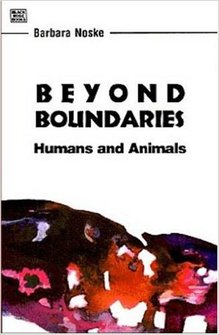
Conventional animal welfarism - the very name implies as much - is generally seen in a positive light. It is so firmly entrenched in the modern cultural imagination that it is regarded, according to research fellow at the University of Sydney, Barbara Noske, as “an accepted good in Western society.” Furthermore, as stated, effective animal welfare legislation and “good welfare practice” has always been claimed, increasingly so in recent years, as the most serious concern - often the number one interest - of those who themselves wish to actively exploit nonhumans as a commercial or “sporting” resource. In other words, it is fairly rare to find even animal users who do not regularly articulate fervent support for the concept of orthodox forms of animal welfarism.
Since the emergence of animal rights philosophy represents both a radical rejection of the human use of other animals and also a fundamental challenge to its regulatory mechanisms, conventional animal welfarism responds to rights-based claims ideologically. It responds with a generalised charge that rights-based approaches are “unwarranted interferences,” “extreme opinions” and, most of all, “unnecessary ideas.” New welfarism reacts in a similar but not exactly the same way.
Thinking about rights and welfarist approaches to human-nonhuman relations means thinking about very different approaches to the subject, whereas traditional and new welfarists simply locate themselves in different places on a continuum that starts at least with regulating use. Essentially, traditional animal welfarism suggests that any desire to go beyond its own established precepts makes no sense, and serves no positive function, not even for nonhuman animals. New welfarists join in with pejorative claims about “utopianism” and “impracticality,” while having abolition as their end game. Not only does animal welfarism stand like a monolith to inform the vast majority of discussions about human-nonhuman relations, fundamental and historical social conventions, and routine practices, gives succour to mainstream, society-wide, views that firmly state that:-
(1) human beings are entirely justified by many religious and philosophical canons in their use of other animals for their own purposes and
(2) this exploitative use, precisely because it is thought to be strictly controlled and regulated, can be properly regarded as ethically acceptable since the animals so used do not actually suffer in the course of their usage.
Fundamental social “truths” concerning human-nonhuman relationships are thought to be ~and repeatedly asserted as~ so self-evident that the norms and values which support mainstream views about other animals are unconsciously, and without controversy, transmitted on a daily basis at every level of primary, secondary and adult socialisation.
Put simply and directly, human beings in western societies are socialised to become animal harming animal lovers.
Since the “normal,” “justified,” and “proper” use of other animals is a central feature of western cultures, the apparent self-evident character ~and the unequivocal “correctness”~ of these embedded social attitudes means that any challenge to them can almost automatically be regarded as unneeded, beyond the pale, unreasonable, invalid, irrational and even “dangerous.”
Claims from animal rights positions state that society is so prejudiced on the basis of species membership that, fuelled by notions of “human chauvinism,” most people quite unproblematically instil speciesist ideology into children day after day, week after week, year upon year. They do this through routine discourse and everyday social practices - most obviously, at every mealtime (although the majority of speciesist parents do not appear to go out of their way to tell their children what ~i.e., who~ they are eating).
Similarly, speciesist sentiments are culturally transmitted in common stories told to children, and can be seen reflected beyond food choices, for example in clothing, social rituals, forms of entertainment and social gatherings. In terms of what children learn about human orientations toward other animals, the vast majority of youngsters are effectively socialised as speciesists well before they can be regarded as ethically aware individuals. In other words, most children are encouraged to participate in organised animal-harming activities (again, for example, at every mealtime) prior to developing the ability to morally evaluate what they are brought up to do with nonhuman property and animal produce.
Furthermore, they are routinely exposed to, and enticed to believe, the justifying ideology that accompanies the human exploitation of nonhuman “resources” – yet again, well before they know for themselves what their own and others’ conduct entails for the lives (and, of course, the deaths) of other sentient beings. Indeed, in effect, adults may feel pressure to mislead their own children, or just lie to them, about the starkest realities of many human-nonhuman relationships.
This suggests that many parents may feel the need to obscure many of the details (if they know them) of what happens to the animals their children consume, especially those animals consumed as food. After all, who really wants to know the ins and outs of what humans do to other animals when they exploit them? Ironically, an average vegan is likely to know much more about how a piece of an animal’s muscle arrived on a flesh eater’s plate than most meat eaters.
The danger of the new welfarist approach to human-nonhuman relations is that it misleads the public into thinking that caring about nonhuman animals amounts to picking and choosing between different animal production systems. Pay a little extra, and look out for our endorsements, new welfarism seems to say, and then it points the public to animal produce they should eat and to those products they should not. Surely, openly advocating veganism as the baseline position of animal rights is much better ~and even simpler~ than getting our feet wet in such muddied waters?
Essentially, animal welfarism serves to regulate and control the human use and systematic exploitation of other animals while rarely attempting to totally end such use and exploitation. This is certainly true of orthodox forms of animal welfarism, while post-1970s "new welfarism" (law professor Gary Francione's controversial term) insists that step-by-step reform of exploitative practices may eventually abolish use, an ideological assertion disputed by abolitionist animal rightists.
From a sociological point of view, animal welfarism cannot be solely regarded as simply a set of legislative interventions enacted from the beginning of the nineteenth century to control, regulate and enforce the “humane use” of other animals. Orthodox animal welfarism undoubtedly seeks to perform its regulatory function: it regulates exploitation, while user industries can cope with welfare reforms if profits are not seriously dented - and yet animal welfarism appears to do far more than this. For example, it operates as a firmly entrenched institutionalised ideology that effectively helps to promote and maintain the value of “kindness to animals,” and an ethos of “caring for” or “loving” nonhuman animals, while at the same time justifying routine harmful practices and time-honoured social attitudes.
As for user industries, it does them no real harm to be seen to respond to welfarist considerations – after all, they routinely claim the status of concerned welfarists, and they routinely reply to rights-based claims with animal welfare assurances. Typically, when animal welfare modifications are afoot, they spend a small proportion of their vast fortune initially opposing all reform attempts. Some fights they win, a few others they lose. However, aware of the transient nature of public attention, even in the latter cases, user industries can subsequently gain promotional benefits by characterising themselves as “animal welfare friendly” or “humane” - and all the better if they can secure ringing endorsements from former opponents in the national animal welfare corporations, which seem to come ever more frequently.
The apparent transience of public attention is matched by its failure to fully focus on precise detail. This is one major reason why modern-day politics is based on short ~and oft repeated~ sound bites. Likewise, public inattention also helps to explain why Francione, talking to Vegan Freaks Radio a few years ago, that his university colleagues assumed, due to PeTA’s promotion of McDonald’s limited welfare reforms, that the whole of McDonald’s range was to be considered “humanely produced.”
They even thought that Francione himself would be eating there.
Sociologists who study the mass media warn that there is an important issue of the encoding and the decoding of messages and – even in the age of the internet, the mass media are still the source of most people’s knowledge of the news. In other words, while PeTA may believe they clearly highlighted the limitations of the McReforms, that in itself does little or nothing to guarantee that audiences will receive the message “as sent.”
In general terms, animal welfarism is the accepted societal lens through which moral issues raised by the treatment of other animals are made sense of. Animal welfare opinion is so commonplace, and so firmly sedimented in the public consciousness, that regarding human-nonhuman relationships in any other way is most unusual and exceptionally difficult, even for “pro-animal organisations” and individual campaigners in the nonhuman advocacy movement. Therefore, ideological animal welfare has not only served to regulate exploitation but has also, for generation after generation, been a central support system justifying and excusing what humans have done ~and continue to do~ in the name of science, agriculture, and entertainment.
Conventional animal welfarism - the very name implies as much - is generally seen in a positive light. It is so firmly entrenched in the modern cultural imagination that it is regarded, according to research fellow at the University of Sydney, Barbara Noske, as “an accepted good in Western society.” Furthermore, as stated, effective animal welfare legislation and “good welfare practice” has always been claimed, increasingly so in recent years, as the most serious concern - often the number one interest - of those who themselves wish to actively exploit nonhumans as a commercial or “sporting” resource. In other words, it is fairly rare to find even animal users who do not regularly articulate fervent support for the concept of orthodox forms of animal welfarism.
Since the emergence of animal rights philosophy represents both a radical rejection of the human use of other animals and also a fundamental challenge to its regulatory mechanisms, conventional animal welfarism responds to rights-based claims ideologically. It responds with a generalised charge that rights-based approaches are “unwarranted interferences,” “extreme opinions” and, most of all, “unnecessary ideas.” New welfarism reacts in a similar but not exactly the same way.
Thinking about rights and welfarist approaches to human-nonhuman relations means thinking about very different approaches to the subject, whereas traditional and new welfarists simply locate themselves in different places on a continuum that starts at least with regulating use. Essentially, traditional animal welfarism suggests that any desire to go beyond its own established precepts makes no sense, and serves no positive function, not even for nonhuman animals. New welfarists join in with pejorative claims about “utopianism” and “impracticality,” while having abolition as their end game. Not only does animal welfarism stand like a monolith to inform the vast majority of discussions about human-nonhuman relations, fundamental and historical social conventions, and routine practices, gives succour to mainstream, society-wide, views that firmly state that:-
(1) human beings are entirely justified by many religious and philosophical canons in their use of other animals for their own purposes and
(2) this exploitative use, precisely because it is thought to be strictly controlled and regulated, can be properly regarded as ethically acceptable since the animals so used do not actually suffer in the course of their usage.
Fundamental social “truths” concerning human-nonhuman relationships are thought to be ~and repeatedly asserted as~ so self-evident that the norms and values which support mainstream views about other animals are unconsciously, and without controversy, transmitted on a daily basis at every level of primary, secondary and adult socialisation.
Put simply and directly, human beings in western societies are socialised to become animal harming animal lovers.
Since the “normal,” “justified,” and “proper” use of other animals is a central feature of western cultures, the apparent self-evident character ~and the unequivocal “correctness”~ of these embedded social attitudes means that any challenge to them can almost automatically be regarded as unneeded, beyond the pale, unreasonable, invalid, irrational and even “dangerous.”
Claims from animal rights positions state that society is so prejudiced on the basis of species membership that, fuelled by notions of “human chauvinism,” most people quite unproblematically instil speciesist ideology into children day after day, week after week, year upon year. They do this through routine discourse and everyday social practices - most obviously, at every mealtime (although the majority of speciesist parents do not appear to go out of their way to tell their children what ~i.e., who~ they are eating).
Similarly, speciesist sentiments are culturally transmitted in common stories told to children, and can be seen reflected beyond food choices, for example in clothing, social rituals, forms of entertainment and social gatherings. In terms of what children learn about human orientations toward other animals, the vast majority of youngsters are effectively socialised as speciesists well before they can be regarded as ethically aware individuals. In other words, most children are encouraged to participate in organised animal-harming activities (again, for example, at every mealtime) prior to developing the ability to morally evaluate what they are brought up to do with nonhuman property and animal produce.
Furthermore, they are routinely exposed to, and enticed to believe, the justifying ideology that accompanies the human exploitation of nonhuman “resources” – yet again, well before they know for themselves what their own and others’ conduct entails for the lives (and, of course, the deaths) of other sentient beings. Indeed, in effect, adults may feel pressure to mislead their own children, or just lie to them, about the starkest realities of many human-nonhuman relationships.
This suggests that many parents may feel the need to obscure many of the details (if they know them) of what happens to the animals their children consume, especially those animals consumed as food. After all, who really wants to know the ins and outs of what humans do to other animals when they exploit them? Ironically, an average vegan is likely to know much more about how a piece of an animal’s muscle arrived on a flesh eater’s plate than most meat eaters.
The danger of the new welfarist approach to human-nonhuman relations is that it misleads the public into thinking that caring about nonhuman animals amounts to picking and choosing between different animal production systems. Pay a little extra, and look out for our endorsements, new welfarism seems to say, and then it points the public to animal produce they should eat and to those products they should not. Surely, openly advocating veganism as the baseline position of animal rights is much better ~and even simpler~ than getting our feet wet in such muddied waters?

 RSS Feed
