On Human Relations with Other Sentient Beings
  • Home
  • The Blog

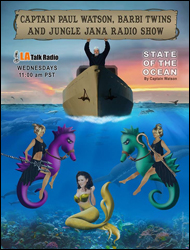
AUDIO: Guesting on the "State of the Oceans" Radio Show to talk about Veganism

10/26/2015

 
Picture
I was a guest on State of the Oceans with Captain Paul Watson, Shane Barbi, Sia Barbi, and Jani Schulz, October 14th and 21st 2015.

The Oceans team were keen to talk about veganism in the light of recent postings from Captain Watson, which drew a response from law professor, Gary Francione.

I defended the justice-for-all philosophy of veganism and explained how sociologists tend to look at social movements and social movement participation.

Here are the two links for the full programmes - and below, my clips from each show extracted out.

State of the Oceans, October 14th.

State of the Oceans, October 21st.



AUDIO & PRINT: Unthinkable: How do you eat with a clear conscience?

10/25/2015

0 Comments

 
Picture
How time flies.

​As we move towards World Vegan Month 2015, I reproduce in this blog for the first time an Irish Times article about the "ethics of eating."

Journalist Joe Humphreys of the IT contacted the Vegan Information Project about an article he was preparing for the paper. He wanted to feature the work of Gary Francione who, as we know, is shy and retiring, so I stepped in to discuss his position on animal rights - and a few other things. 
​

0 Comments

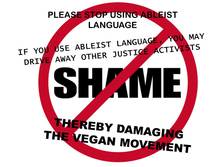
Ableist Language: A Serious Animal Movement Issue

10/22/2015

2 Comments

 
Picture
For social justice activists, language use is always an issue. Indeed, language can be a battlefield. Feminist argued that the term "history" should be thought of as "his story;" critical sociologists came to label the sociological mainstream the "malestream," and animal activists say "bloodsports" rather than "field sports" and "vivisection" rather than "biological experimentation."

Not so many years ago, many if not most animal advocates would talk about other animals in term of "it." Some still do - it's a habit that is stubborn and hard to break free from, and supported, of course by the oppressive ideology of speciesism. It seems fairly common that animal advocates still refer to a nonhuman animal as "that."

Nevertheless, speciesist language is something we as a movement are improving on. Ableist language remains a major problem - one that I believe needs attending to.

Here's one brief account of how people may be effected when others use ableist language.


I have a great-aunt who had this label ["moron"] and was warehoused in state hospitals for much of her brief 25 years of life. So when I see this word, it resonates through history. I remember all of the people with this designation who lived and died in state schools and state mental hospitals under conditions of extreme abuse, extreme degradation, extreme poverty, extreme neglect and extreme suffering from disease and malnutrition. My great-aunt lay dying of tuberculosis for 10 months under those conditions in a state mental hospital. The term moron was used to oppress human beings like her, many of whom are still in the living memory of those of us who have come after.

Moron -- and related terms, like imbecile and idiot -- may no longer be used clinically, but their clinical use is not the issue. They were terms of oppression, and every time someone uses one without respect for the history of disabled people, they disrespect the memory of the people who had to carry those terms to their graves.

Note how the writer is saying that oppressive terms may remain oppressive even if they no longer have the same meaning. This may apply to words with multiple meanings. This is why we should not argue when people say that they find a word or phrase triggering and upsetting. The fact that they are saying it should indicate that this is an issue for them [1]. I'd say that everyone would hesitate about using the phrase "you spaz" just because a modern use for it became popular.​

It seems that ableist language is as common and embedded into cultural norms as speciesist language is - perhaps even more so.

So, let's try to be good allies, and let's at least begin to question, call out, and try to eliminate ableist language from the animal advocacy movement.

A lot has been written about why the "animal movement" are not good at forging alliances with other social justice movements. Indeed, it is not clear that the animal advocacy movement is recognised as a social justice movement, even within large parts of the movement itself.

There is sexism, racism, often fascism, and certainly ableism in the prevailing animal advocacy movement - and we wonder why justice activists shun us, or think we are politically shallow, or accuse us of being a single-issue?

If we want to make progress; if we want to have a dialogue with (other) progressive movements, we need to radically sharpen our tools.

THIS is a useful site to visit when looking to avoid ableist language.


[1] It seems to be the case that some believe that this apparent concession to the "politically correct" may be used as a means to silence critique. This does seem to be a possibility. Perhaps we need to assess such a possibility on a case-by-case basis but one thing we cannot do is use this possibility to reject the idea that we should ignore the harm ableist language causes to individuals and/or groups.


​

2 Comments

VIDEO: GENUINE Rights-Based Animal Rights

10/20/2015

2 Comments

 
Picture
This blog entry is designed to showcase the work of animal rights philosopher, Tom Regan, author in 1983 of The Case for Animal Rights.

For a brief period in the history of the animal advocacy movement, Regan's rights-based position was more popular than Peter Singer's version of animal welfarism. The reasons why the work of Tom Regan became marginalised in the movement know globally as the "animal rights movement" is disturbing, shameful and, as ever, a great deal to do with money and power.

Here is a series of videos to highlight Regan's rights-based approach to animal rights. The fact that one has to point out that there is actually a minority of people in the "animal rights movement" who take a rights-based approach is a scandal in itself.

In the first video, Regan discusses his 1988 speech at an anti-vivisection rally attended by animal activists. He talks about the context, about the film Unnecessary Fuss, and the regrets he has about using the rhetorical of war.

The second video is the speech itself, described as the "greatest animal rights speech of all time." (click HERE for the transcript).

The third video is Unnecessary Fuss, which Regan talks about in the first interview. It should be remembered that this video was filmed by vivisectors for their own use ONLY. It was never meant to be seen by members of the public or members of the animal advocacy movement.

The fourth and fifth videos are Regan's contributions to the 1989 Royal Institute of Great Britain. I have included the "long" version of the fourth video, the one that includes a strong critique of Singer's position. There is one version where this was snipped out - corruption everywhere, folks.

I would invite you to see the Regan videos as an introduction to a genuine rights-based position on human relations with other sentient beings.

​Of course, with all theories, there are some problem's with Regan's "rights view," but this is a good place to start.


2 Comments

Are We Going to Fight Back – or Just Watch it Happen?

10/19/2015

0 Comments

 
Picture
Right now – systematically – the philosophy of veganism is being deliberately dismantled.
 
The very guts of veganism – the justice-for-all basis of the idea – are being ripped out and ripped up.
 
There are a number of animal advocates busy undermining the principles that veganism is built on. They are spreading the lie that veganism is nothing more than a plant-based diet. This shallowing out of veganism is summed up in the statement that the vegan movement is “about food.”
 
Veganism has never, ever, only been about food. Veganism is a philosophy for living in peace with the world to the extent that it can be done. It ultimately stands for non-violence and seeks a radical transformation of human values. The introduction to the excellent book, The Essential Marcuse, edited by Michael Feenberg and William Leiss, discusses and outlines the thrust of the radical vision of critical theorist Herbert Marcuse which closely correspondents with vegan aspirations.
 
         A society…richer in public goods and human sympathy – in parks, schools, and medical care; a society more just,           more egalitarian, more helpful to the world’s poorest people, less warlike, less racist, and less frantic about the                 pursuit of money; a society more considerate of the needs of other animals, more respectful of wilderness and                   Earth’s remaining solitudes (Feenberg 2007: xli)
 

​Sociologist Matthew Cole writes* of “the breath-taking transformative vision of the vegan pioneers in the 1940s and 1950s.” He argues that the aim and object of veganism combines compassionate non-exploitation of other animals with an emancipated vegan self, and a more compassionate human society. Vegan ethics, Cole argues, right from the beginning, was directed towards the interconnected goals of transforming human beings and transforming human society in a grand vision of justice-for-all. Not for nothing did Donald Watson declare that veganism was the greatest cause of Earth.
 
Brand Spanking New
 
21st century vegans surely have difficulty recognising that their movement is so new. Shiny new! The British Vegan Society has been around since 1944, sure, but that does not mean that veganism has been central to campaigning for more than a couple of decades – at most.
 
Long-time animal advocate Ronnie Lee began to live vegan in 1971 but he explains that, when he went vegan, all the large animal organisations were staffed by people who consumed other animals. Then Peter Singer’s Animal Liberation was published in the mid-1970s, followed by Tom Regan’s rights-based The Case for Animal Rights in 1983.
 
The publications of these books changed animal advocacy forever and Ronnie says that one consequence was that the staff of the large groups started to live vegan. However, even though they went vegans as individuals, the campaigns they ran were not vegan-based, a situation that some argue remains to this day. The campaigning in the 1980s and into the 1990s remained committedly single-issue in nature. Anti-bloodsports, anti-vivisection, anti-“factory farming,” anti-circuses, and so on and, true enough, these campaigns continue today.
 
So, even though the campaigners were vegans, the idea that veganism should be the baseline position of campaigning had not yet been thought of.
 
The campaigning reality Ronnie Lee describes is certainly the one that I recognise from when I began to live vegan in 1979. I was a press officer for various groups throughout the 1980s, but rarely did any of us speak about veganism. Incredibly – shamefully? – I didn’t mention veganism in hundreds of interviews on TV, radio, or in print. In those days, we limited answers to the issues being discussed, like hunting, or animal experimentation, etc. If veganism was mentioned at all, it was in connection to one’s diet, or what type of shoes one was wearing.
 
So, given that, historically, vegan campaigning has only just started, it is scandalous that attempts are currently being made to stop it for “strategic” reasons.
 
We need to defend vegan campaigning from this attack being lead in the main by vegetarian organisations in mainland Europe. Ironically, their call to reduce to almost invisibility any mention of veganism, animal rights, and anti-speciesism, is compatible to vegetarian ideals but not vegan ones.
 
If you see these vegan underminers being invited to speak at vegan events, question it, complain. If you attend a vegan event where they speak and tell audiences to not be dietary vegans, to eat flesh if paid money to do so, or to routinely consume animal produce in order that the general public will not get a “bad” image of vegans, speak out. Challenge them. Defend veganism.
 
Just as in the 1970s, 1980s, and beyond, just because individual claim to be dietary vegans or have fancy names mentioning “vegan” or “veganism,” that does not mean they campaign for veganism: often the opposite can be true.
 
Have I Nothing Better To Do?
 
I have lots to do! I’m busy getting the Vegan Information Project’s (VIP) vehicle back on the road after it (he – we call him Neville) was stolen then recovered damaged. The Vegan Information Project provides a unique brand of vegan education outreach in Ireland. Weather-proof gazebo stalls, video booths, plant-based samples and portions, literature, including a zine library, on-the-spot t-shirt making in the summer, and a “tea station” café area where people sit and read, or talk at length to the VIP volunteers about all things vegan.
 
The VIP “Vegan Information Day” events are full-on vegan. Large signs about veganism and justice. We do not find that the public are scared of, or even wary of, exploring the idea of veganism. For the first time in history, most people now know how to pronounce the bloody word! If that is commonplace to you, it certainly isn’t for long-timers like Ronnie Lee.
 
Although there is this important work to be done in Ireland, and it is being done, time also needs to be spent defending the philosophy of veganism from this insidious attack. One of the proponents of this less-than-vegan stance used to delight in telling his audiences that the organisation he founded was funded in part by politicians who apparently believe that vegans have a mental illness. He also routinely indulged himself in the social construction of a “crazy vegan” slur. Talk after talk suggesting that consistent vegans can be “crazy,” shouting in the streets, flailing their arms about uncontrollably, and unable not to be rude and aggressive in restaurants, allegedly “proud” that their dietary preferences are next to impossible to live by. Some of his colleagues still tell audiences in 2015 to be aware of the “crazy vegans.”

Nonetheless, it seems that a lot of this destructive claims-making has been eliminated, slimmed down, or at least not said so much in public of late – so challenging this attack on veganism is well worth it – and important.
 
We’ve just begun – let’s not back down from ripening up people to the justice-for-all philosophy of vegan now!!
 
I repeat…
 
If you see these vegan underminers being invited to speak at vegan events, question it, complain. If you attend a vegan event where they speak and tell audiences to not be dietary vegans, to eat flesh if paid money to do so, or to routinely consume animal produce in order that the general public will not get a “bad” image of vegans, speak out. Challenge them.
 
Please defend veganism.
 

* Cole, M. (2014) ‘‘The Greatest Cause on Earth’: The historical formation of veganism as an ethical practice’, in N. Taylor & R. Twine (eds) The Rise of Critical Animal Studies – From the Margins to the Centre, Routledge.

0 Comments

"Vegetarian First" -v- The Vegan 1-2-3

10/9/2015

6 Comments

 
Picture
In an ARZone guest interview, Dr. Will Tuttle, author of The World Peace Diet, suggests that, as a general matter, people tend to move toward veganism by going vegetarian first. He argues that, “Veganism is almost inconceivable to the typical omnivore.” Tuttle adds:
  • It’s also important to recognize, I think, that most of the folks who move from eating a typical diet to a vegan one do so in 2 basic stages – first, they move to vegetarianism, which is actually doable to them, and it’s typically quite a public event. Veganism is almost inconceivable to the typical omnivore. Then, from vegetarianism, the move to veganism is more private. As activists and educators, it’s helpful to be aware of this so we can plant seeds effectively.

Writing in the Vegan Society’s magazine (The Vegan, Spring 2010), law professor Gary Francione suggests that Will Tuttle’s standard approach to this issue is flawed, stating

I would like to suggest that the conventional wisdom on this matter is wrong and that we should educate everyone, including and particularly omnivores, about veganism and shouldnever promote vegetarianism as morally preferable to being an omnivore.

Francione describes an exchange he claims he had on a live chat programme, which goes as follows

“Do you agree with the notion that it is wrong to inflict unnecessary suffering or death on animals?” 

“Yes, of course.” 

“We could have an interesting discussion about the fine points of “necessity,” but would you agree that it is wrong to inflict suffering and death on animals for reasons of pleasure, amusement, or convenience?” 

“No brainer. Sure. I really objected when it was revealed that [American football player] Michael Vick was involved with fighting dogs. I think it’s barbaric to do that.” 

“Why?” 

“It’s obvious. It’s wrong to make animals suffer and die for our amusement.” 

“Do you eat meat or cheese or drink milk?” 

“Yes, I do not eat much beef because I know it’s bad for you but I eat pork, chicken, and fish. And I love cheese and ice cream.” 

“What is the difference between what you’re doing and what Michael Vick did?” 

“What? I don’t understand.” 

“Well, Michael Vick imposed suffering and death on animals because he enjoyed the results. Those of us who eat meat and dairy impose suffering and death on animals because we enjoy the results. We just pay someone else to do the dirty work.” 

“But surely there’s a difference.” 

“What is that difference? You don’t need to eat animal products. Indeed, many mainstream health care professionals agree that animal products are detrimental to human health. And animal agriculture is unquestionably an ecological nightmare. The best justification that we have for inflicting pain, suffering, and death on more than 56 billion animals annually, not counting fish, is that they taste good.” 

“I never thought of it like that.”

Francione adds that he and the same person had a follow-up conversation and, “Three days later, the person involved in this exchange wrote to tell me that she had decided to become vegan.”

So, instead of the flawed “conventional wisdom” of vegetarianism first, Francione recommends his “Vegan 1-2-3 Plan,” which introduces a three-stage move toward veganism: “The person goes vegan for breakfast for some period of time (a few weeks, a month). She sees how easy it is and how delicious and satisfying a vegan breakfast is. She then goes vegan for lunch for some period of time, and then for dinner, and then she’s vegan.”

This whole subject seems to bear some similarity to an issue raised during Dr. Mary Martin’s (orAnimal Person’s) guest interview on ARZone, when she addressed the issue of language, and particularly Joan Dunayer’s recommended language style. Martin effectively says that people can be alienated from arguments for animal rights if they are couched in difficult and unusual language. She argues that the use of words such as “flesh” and “aquaprison” (Dunayer’s suggested alternative for “fish tank”) have only limited use, suggesting that

People have only so much tolerance for descriptive language that they’re not accustomed to. It’s offensive to them and they become defensive and then the conversation’s over.

I mentioned in a comment on the Will Tuttle transcript on ARZone that I subscribe to Donald Watson’s suggestion (writing in the first edition of The Vegan News, 1944) that people need to be “ripened up” to new ideas. This seems to me to mean that new forms of language may need to be employed to challenge dominant linguistic forms, and that we need to directly speak to people about what we actually stand for – ethical veganism.

It seems that Gary Francione is right to suggest that we should not be seen to promote vegetarianism, or suggest that vegetarianism amounts to an adequate way to discharge our moral obligations to other animals. However, that does not mean that we need to simply ignore what is typically the case in terms of how people respond to claims-making in the animal advocacy movement. In other words, even if it is the case that people move to vegetarianism before veganism, it does not mean that our veganism-as-the-moral-baseline message needs to change. It simply means that we need to recognise that people respond to messages in a variety of different ways.

In the sociology of the media, for example, concepts of encoding and decoding are used to acknowledge that whatever the values a message is encoded with, the audience(s) of the transmitted message will decode it as they will. Our “job,” as animal advocates, is to encode our messages with our values which place veganism as central - and yet expect that our audience(s) will react in various ways to them. If Will Tuttle is right that many omnivores will find the notion of veganism as “almost inconceivable,” that simply means that we have to redouble our efforts to “ripen” them to the values of veganism while not being condemnatory if they choose vegetarianism first.

Vegans need to be critical of vegetarianism while understanding of vegetarians – and of omnivores who choose to go vegetarian first. The issue that would bother me would be if animal advocates were to suggest that we “tactically” tone down our claims-making for fear of alienating audiences, be it in refusing to use words that challenge dominant social views of others animals, or in backing down from a clear advocacy of veganism.

6 Comments

AUDIO: Join a Growing Resistance to the "Professional" Attack on Veganism

10/8/2015

0 Comments

 
Picture
[Please scroll down for the audio player, or click HERE]

​A few weeks ago, I took part in an online “debate” with Mr. Tobias Leenaert, the founder of Ethical Vegetarian Alternative (EVA). The event was hosted by an online platform that publishes podcasts about “animal issues.”
 
For a variety of reasons, the original recording has not been released, so I’ve decided to publish the Skype recording I made. I do this on my own volition and initiative.
 
Since at least 2013, I’ve been concerned about the position and behaviour of Tobias Leenaert. On behalf of EVA, government funded to the tune of €165,000 per year from politicians who apparently believe that vegans “are crazies,” and now independently as “The Vegan Strategist,” Mr. Leenaert regularly speaks to audiences of young animal advocates and essentially seeks to undermine veganism in a dietary sense and mocks and belittles the wider philosophy of veganism.
 
The “debate” has a number of themes.

Hypotheticals.

Mr. Leenaert poses a number of hypotheticals that seek to trap vegans into situations where they believe that eating other animals, or hens’ eggs, for example, is not only acceptable but a “good” thing to do. These hypotheticals include non-vegan friends making mistakes when cooking for a vegan; whether anyone would begin or remain on a plant-based diet if they had access to bread and water only, and would a vegan finish off a half-eaten “steak” in a restaurant if offered a lot of money to do so by a millionaire.

These hypotheticals are never presented to vegan audiences with a view to help them explore and discuss ways to avoid eating other animals but always crafted in a way that suggests to them that they should violate their vegan principles for some alleged greater good.

Essentially, these hypotheticals amount to rights violations NOW in order to bring about future benefits. Mr. Leenaert, as you’ll hear, has difficulty understanding that eating animal produce is to involve oneself in processes that violate the rights of other animals*
​

Who does what?

As you’ll hear, this is my chief objection to Mr. Leenaert’s vegetarian position. He uses a two-phase model whereby phase one (now and for the foreseeable future) is a pre-vegan stage in which he suggests animal advocates “go easy” and rarely mention topics like veganism, animal rights, and anti-speciesism. If given money to run an advertising campaign, he would deliberately avoid using any such term, believing that the world is simply not yet ready for veganism, especially not the justice-for-all philosophy of veganism. 

The main EVA initiative is the organisation of a “veggie day” in Belgium. Their hope is that “veggie day” (not vegan day) will become a two-times-a-week event sometime in the future. Apart from that, Mr. Leenaert supports the “reducetarian” movement and he believes that “meat reducers” have more impact of the sale of flesh than vegans do. He also believes, without much evidence it seems, that “meat reducers” facilitate the expansion of the availability of 100% plant-based products. 

“Phase one” is all about less-than-vegan campaigning but he wants vegans to do it, and that’s why he routinely talks to vegan animal rights advocates. 

I object to this for a simple reason. Speaking historically, vegan education outreach is new – in the scheme of things, it has really only just begun. Until the late 1990s, few animal advocates placed veganism at the core of their campaigning messages. In the light of this, I oppose anything that takes vegans away from campaigning for veganism. Of course, individuals can campaign as they wish, but when vegans do the less-than-vegan work they leave a hole: reducetarians and vegetarians do not promote veganism. It’s as though there are two football teams on a pitch and the red team are able to encourage players from the blue side to join them but the blue team cannot recruit red team members. 

As you’ll hear, my position is that the vegetarians and other “meat reducers” can do Mr. Leenaert’s campaigning which, after all, is chiefly based on the reduction of flesh consumption. I ask him to leave the vegans alone to do vegan campaigning. 
​
Moral and non-moral reasons.

This is an area of agreement, except that Mr. Leenaert seems to believe that vegans are opposed to talking about non-moral reasons. As it was recently pointed out to Mr. Leenaert by a representative of the National Animal Rights Association in Ireland, in a panel discussion in Dublin, grassroots vegan advocates have no issue with talking about non-moral reasons to bring about change. However, they blend them with the moral animal rights arguments that they present. 

Non-moral reasons include someone going to India and eating vegetarian whilst there because they are grossed out by the fact that “meat” is not refrigerated, and that scientists and very rich persons are developing “realistic” plant-based “milks” and “meat.” There is little animal advocates can do about any of that; and there seems to be little or no objections to these developments coming from the vegan movement, albeit that “mock meats” have always created some discussion in vegan circles. Most vegans I know tend to think that they aid “transition” to a plant-based diet and are useful for vegans who have children. 

+++

You may be wondering why Mr. Leenaert is so fixated on the vegan community since his “strategy” is entirely compatible with vegetarianism, at least for a number of years until his “phase-two” kicks in. The reason is that he recognises that vegans are the activists in the animal advocacy movement and that’s why he wants them for the less-than-vegan campaign. He virtually said this in Dublin recently.
 
In addition, most modern-day conferences and festivals are run by and attended by vegans, sometimes overwhelmingly by vegans. This is, in his eyes, a “market” not to be missed.
 
By wish for the future, and the reason I’m publishing this recording, is for vegans to reject Mr. Leenaert’s vegetarianism and for them to continue advocating for the philosophy of veganism. Mr. Leenaert is not a dietary vegan** and rejects and mocks the idea that veganism is more than a diet.


* Tobias Leenaert takes a utilitarian position in ethical matters, seeking to balance suffering and happiness. He rejects animal rights theory and speaks only of legal rights (animal rights is a position based on moral rights which utilitarians tend to believe do not exist and are nonsense.)

** He thinks veganism should be “flexible,” “impure,” and that dietary “exceptions” should be “allowed.” In other words, he argues for vegans (even dietary vegans) to become vegetarians.

0 Comments

About the Spirit of Veganism

10/6/2015

0 Comments

 
Sandra Higgins, of Eden Farmed Animal Sanctuary, recently said the following about the spirit of veganism. I agree with these sentiments 100%.

Someone spoke recently about the spirit of veganism. It might not make logical sense to a non-vegan that eating an animal who was already accidentally killed is non-vegan, but once you have connected to other animals in a way in which they are valued as important beings, you just couldn't eat a piece of them. 

I have just spent two hours at the veterinarian with yet another hen from our sanctuary who has died of peritonitis - a condition which arises as a direct result of being bred to lay eggs for human consumption. In a million years I could not eat her abandoned eggs, even if I wanted to. 

To me they represent the incredible suffering she endured that robbed her of the life that she was enjoying, prior to becoming ill. Call me naive, but that is the spirit of veganism. And the more people who begin to view animals through that relational lens, the better.

[Thanks to Sandra for permission to reproduce this quote]

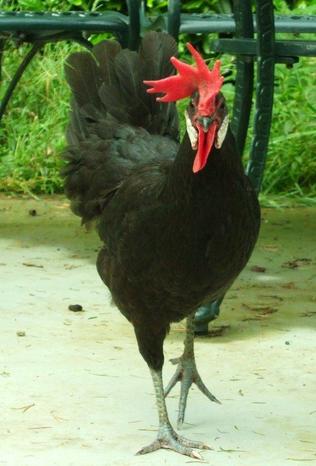
[Below is Matilda (not the hen referred to in the quote) and this is her story]


​
Picture
0 Comments

Are You Diverting?

10/5/2015

0 Comments

 
Picture
​I’m unprofessional.
 
Think about this scenario.

We are told by the “leaders” of the animal advocacy movement that we should be involved in all sorts of advocacy: reducetarianism, vegetarianism, animal welfare, animal rights, veganism.
 
But there’s a catch to this. Vegans should support less-than-vegan campaigning, they say. Vegans can make up their minds what they campaign for (true enough). However, there’s an imbalance here surely?

If the “leaders” want vegans to “do it all,” that’s not a message they can tell to the reducetarians and vegetarians – because they ain’t gonna do VEGAN work.

Who else but vegans will?

 
Given that there are more reducetarians and vegetarians than vegans, why isn’t it their responsibility to do the less-than-vegan stuff? Everyone believes, including the “professionals” of the movement, that vegan advocacy is worthwhile (although in very prescribed and limited ways) – so why do vegans let themselves be diverted from vegan campaigning when there are greater numbers doing the other stuff already?

0 Comments

VIDEO: My 365vegans Interview

10/4/2015

0 Comments

 
365vegans is a fascinating project of activist Amanda Hinds who is travelling the world interviewing vegans as she goes. She recently found herself in Ireland and recorded a number of interviews with Irish and Ireland-based campaigners. Luckily, I was one, and the interview is below...

We talked about a variety of vegan and animal rights topics, including the gender dynamics of the movement, intersectionality, single-issues, and discourse on Facebook.

​
0 Comments

    Roger Yates

    Dr. Roger Yates is a rights advocate and sociologist

    Archives

    March 2023
    October 2022
    April 2022
    March 2022
    February 2022
    September 2021
    June 2021
    March 2021
    February 2021
    January 2021
    November 2020
    October 2020
    August 2020
    July 2020
    June 2020
    April 2020
    March 2020
    February 2020
    January 2020
    December 2019
    November 2019
    July 2019
    June 2019
    May 2019
    April 2019
    March 2019
    February 2019
    January 2019
    November 2018
    October 2018
    August 2018
    June 2018
    May 2018
    February 2018
    January 2018
    November 2017
    October 2017
    August 2017
    July 2017
    June 2017
    May 2017
    April 2017
    March 2017
    February 2017
    January 2017
    December 2016
    November 2016
    October 2016
    September 2016
    August 2016
    July 2016
    June 2016
    May 2016
    April 2016
    March 2016
    February 2016
    January 2016
    December 2015
    November 2015
    October 2015
    September 2015
    August 2015
    July 2015
    June 2015
    May 2015

    Categories

    All
    1980s
    Aaron Yarmel
    Ableism
    Ableist Language
    Abolitionising Single Issues
    Abolitionising Single-issues
    Alliance Politics
    Always For Animal Rights
    Amnesty International
    Anarchy
    Andrew Linzey
    Angela Barnes
    Angus Taylor
    Animal Aid
    Animal Equality
    Animal Liberation
    Animal Liberation (book)
    Animal Liberation Front
    Animal Pity
    Animal Rights
    Animal Rights Conference (Luxembourg)
    Animal Rights Movement
    Animal Rights Philosophy
    Animal Rights Show
    Animal Rights Zone
    Animals Property & The Law (book)
    Animal Welfare
    Anna Charlton
    Anthony Giddens
    Aph Ko
    AR2012
    ARCNews
    Arthur Ling
    ARZone
    A Sociology Of Compromise
    Autobiography
    Avoiding Unpleasure
    Award
    Backlash
    Barbara DeGrande
    Barbara McDonald
    Barbara Noske
    BBC
    Being Dogmatic
    Bernard Rollins
    Bloom Festival
    Bob Linden
    Bob Torres
    Brian Kateman
    Bristol
    Bruce Friedrich
    Buddhism
    Calf Food
    Capitalism
    Carl Cohen
    Carnage (film)
    Carol Adams
    Case For Animal Rights (book)
    Chris Powell
    Christie Davies
    Christopher Lasch
    CIWF
    Claims Making
    Claims-making
    Commodore
    Consequentialism
    Counterforce
    CRC Radio
    Critical Theory
    Cruelty
    Cultural Speciesism
    C Wright Mills
    Dave Callender
    Dave Wetton
    David DeGrazia
    David Lee
    David Nibert
    Declan Bowens
    Defending Animal Rights (book)
    Dehumanisation
    Depersonalisation
    Direct Action Everywhere
    DIY Politics
    Donald Watson
    Dorothy Watson
    Dr. Koichi Tagami
    Dublin VegFest
    Earthlings Experience Dublin
    Eden Farmed Animal Sanctuary
    Elizabeth Collins
    Elsie Shrigley
    Emotional Lives Of Farm Animals (film)
    Encouraging Vegan Education (EVE)
    Erik Marcus
    Ethical Vegetarian Alternative
    Eva Batt
    Fairness (concept)
    Farm Kind
    Faye K Henderson
    Federation Of Local Animal Rights Groups
    Frankfurt School
    Freshfield Animal Rescue
    Freud
    Friedrich Engels
    Friends Of The Earth
    Funding
    Funding Appeal
    Fur
    G Allen Henderson
    Gandhi
    Gary Francione
    Gary Steiner
    Gary Yourofsky
    Geertrui Cazaux
    Geertui Cazaux
    Gender
    George Herbert Mead
    George Paton
    Gerry Kelly
    Ginny Messina
    Go Vegan Radio
    Go Vegan World
    Govinda's
    Grassroots
    Hannah Arendt
    Hans Ruesch
    Harold Brown
    Harold Guither
    Hazleton Action Group
    Hazleton Laboratories
    Henry Salt
    Herbert Marcuse
    Herbivores
    Horse Ripping
    House Of Fun
    Howard Newby
    HSUS
    Humanitarian League
    Human Liberation
    Human Rights
    Human Rights Watch
    Humour
    Internet Age
    Intersectionality
    Interviews
    Introduction To Animal Rights (book)
    Irish Times
    Jackson Katz
    Jake Conroy
    James Rachels
    Jeremy Hess
    Jill Phipps
    Jim Mason
    Joan Dunayer
    John Bussineau
    John Fagan
    John Robbins
    Jon Hochschartner
    Jordan Wyatt
    Josh Harper
    Julian Groves
    Jurgen Habermas
    Justice
    Karin Ridgers
    Karl Marx
    Kath Clements
    Kathleen Jannaway
    Kay Henderson
    Keith Akers
    Keith Mann
    Keith Tester
    Keith Thomas
    Kim Stallwood
    Knowing Animals
    Language
    Lauren Ornelas
    League Against Cruel Sports
    Leslie Cross
    Let's Rage Together Podcast
    Linda McCartney
    Lynne Yates
    Macka B
    Mainstream
    Mammals
    Marjorie Spiegel
    Mary Midgley
    Mass Media
    Matt Ball
    Matthew Cole
    Maureen Duffy
    Max Weber
    McDonaldisation
    McDonald's
    Meat Free Monday
    Meat-free Monday
    Meat Reducing
    Media
    Media Sociology
    Melanie Joy
    Mercy For Animals
    #MeToo
    Michael Dello-lacovo
    Milk
    Milton Mills
    Moral Baseline
    Moral Maze
    Movement Crisis
    Movement For Compassionate Living
    Movement History
    National Animal Rights Association
    National Anti-Vivisection Society
    Neil Lea
    Neil Robinson
    Neville The VIP Van
    Newsjack
    News Quiz
    Newstalk Radio
    "New Welfare"
    Nick Fiddes
    Nick Pendergrast
    Norman Fairclough
    Numbers
    NZ Vegan
    Palm Oil
    Patreon
    Patriarchy
    Patrice Jones
    Paul McCartney
    Paul Sauder
    Paul Watson
    Paul Willis
    People For The Ethical Treatment Of Animals
    PeTA
    Peter/Brigitte Berger
    Peter Singer
    Philosophy
    Piaget
    Piers Beirne
    Pigeons
    Pippa Evans
    Plague Dogs
    Plamil
    Podcast
    Poetry
    Pornography
    Poverty Of Ambition
    Power
    "professionals"
    Progressive Podcast Aus
    Prostitution
    Purity
    Rachel Carson
    Racism
    Radicals & Revolutionaries
    Radio 5 Live
    Radio Debate
    Rain Without Thunder (book)
    Real Veganism
    Reducatarianism
    Reducetarianism
    Resilience Of Orthodox
    Richard Adams
    Richard Gale
    Richard Ryder
    Rights (legal)
    Rights (moral)
    Rights (natural)
    Robert Garner
    Ronnie Lee
    Rosemary Rodd
    RSPCA
    Ruhama
    Ruth Harrison
    Sandra Higgins
    Scandals
    Sea Shepherd
    Sebastian Joy
    Sexism
    Sex Roles
    Sexual Politics Of Meat (book)
    Sex Work
    SHAC
    Simon Amstell
    Simon Redfearn
    Siobhan O'Sullivan
    Slaughterhouse
    Slaughter Of The Innocent
    Social-change
    Social-constructionism
    Socialisation
    Social-justice
    Social-movements
    Social-movement-theory
    Sociology
    Speciesism
    Stacia-leyes
    Stanley-cohen
    Stanley-milgram
    States-of-denial-book
    Stephen-clark
    Stephen-clarke
    Stephen Nolan
    Steve Best
    Steve-christmas
    Steve-kangas
    Steven-sapontzis
    Subjectsofalife
    Sue-coe
    Tavs
    Teagan-kuruna
    Ted-benton
    Thanksgiving
    The-animals-film
    The Bloody Vegans
    The-case-for-animal-rights-book
    The-now-show
    The-species-barrier
    The-vegan-magazine
    The-vegan-news-1944
    The-vegan-society
    Thrive Vegan World
    Tik Tok
    Tim-barford
    Tina Cubberley
    Tobias Leenaert
    Tom Regan
    Tom Warby
    Total Liberation
    Trafficking
    Turkeys
    Unnecessary Fuss
    Utilitarianism
    Vegan
    Vegan Buddies
    Vegan Education
    Vegan Education On The Go
    Vegan Information Booths
    Vegan Information Day
    Vegan Information Days
    Vegan Information Project
    Veganism
    Vegan Outreach
    Vegan Pioneers
    Vegan Pioneers Rock!
    Vegan Radio International
    Vegans
    Vegan Social Movement
    Vegan Society
    Vegetarianism
    Vegfest Express
    VegFestUK
    Victoria Moran
    Victor Schonfeld
    Video Talk
    Violence
    Wayne Hsiung
    Wendy McGovern
    World Vegan Summit
    You Caring
    Zami
    Zoos
    Zygmunt Bauman

    RSS Feed

Powered by Create your own unique website with customizable templates.